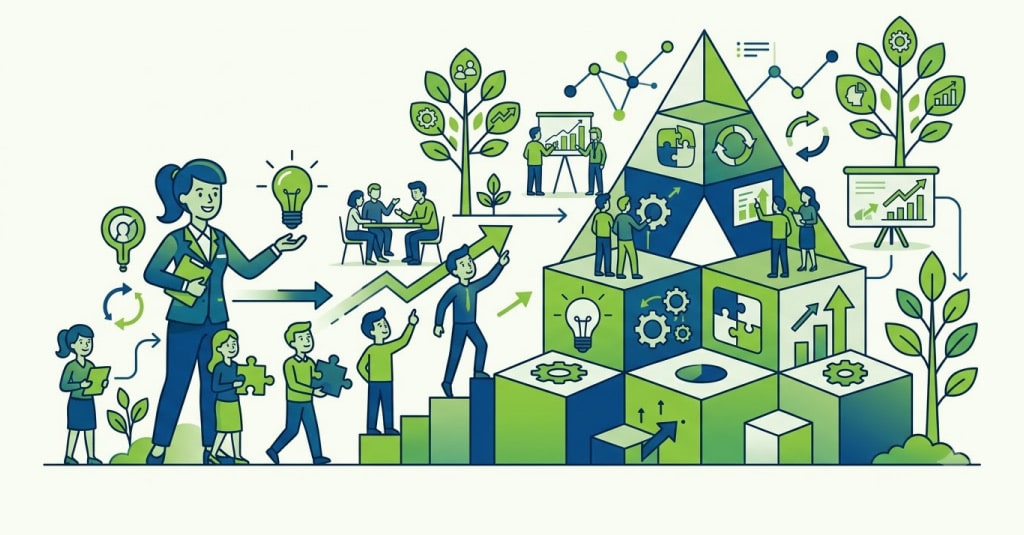





Workforce disruption is now affecting how enterprises scale, transform, and stay competitive. Roles are evolving faster than enterprises can redesign workforce capability models, while AI continues to reshape entire business functions.
Most enterprise learning systems were built for stability, not workforce adaptability. And that gap is now a business risk.
What Is Skills-Based Learning?
Skills-based learning focuses on building real workforce capabilities. Instead of assigning the same training to everyone in a role, it identifies individual skill gaps first. It then delivers more targeted learning based on those gaps. Success is measured by how well employees apply those skills at work.

Why Traditional Corporate Learning Models Are Falling Behind
Many enterprise learning programs have not changed much over the years. Employees complete assigned courses, completion gets tracked, and the cycle repeats. That model depended on stable roles and predictable workforce evolution. Neither exists anymore.
Static role-based learning cannot keep up with workforce change. For example, when a logistics company adopts automation, the learning needs of its operations teams change quickly. Most role-based learning systems cannot adapt at the same pace.
Completion metrics do not reflect capability growth. A 90% course completion rate may look impressive. But if employees cannot apply what they learned, the training delivers little business value. The reporting improves. Workforce capability does not.
LMS-centric strategies often create content sprawl without capability alignment. Most large enterprises sit on thousands of learning assets with no clear map between those assets and the actual skills the business needs to build. The library grows. The gaps do not close.
Scroll the table to the right to read more.
| Traditional Learning | Skills-Based Learning |
|---|---|
| Role-focused | Capability-focused |
| Generic learning paths | Personalized pathways |
| Annual training cycles | Adaptive, continuous learning |
| Course completion metrics | Capability measurement |
| Content delivery | Workforce performance outcomes |
This is not a platform shift. It is a workforce capability redesign.

The Enterprise Skills Crisis Is Now a Business Problem
This is no longer an HR problem. It is an enterprise execution problem.
Enterprises that cannot build capability fast enough face real consequences. Transformation programs slow down. Product cycles become longer. Dependence on external hiring increases. Frontline teams also struggle to execute new strategic priorities.
Workforce agility is becoming a measurable business advantage. Companies that can reskill and redeploy talent faster respond to market shifts more quickly. They also avoid long recruitment delays. That agility requires deliberate workforce capability infrastructure.

What Skills-Based Learning Looks Like in Practice
Traditional learning starts with content. Skills-based learning starts with workforce capability data.
Skills taxonomies support workforce intelligence by creating a shared language for workforce capabilities. Without that structure, enterprises struggle to compare and use learning data across different systems.
Personalized learning paths work when they are driven by real capability gaps. Generic learning paths treat all employees in the same role as identical. They are not. Effective skills-based learning recognizes that and delivers different learning experiences to different individuals based on actual need.
Applied assessments matter more than course completion because they measure whether learning has changed behavior. A scenario-based assessment shows whether employees can apply skills in real work situations. A standard multiple-choice quiz usually cannot measure that effectively.
Operational example: A large healthcare provider noticed recurring issues in patient data interpretation across clinical administration teams. Instead of deploying another generic compliance module, the L&D team took a targeted approach. They first identified the exact capability gaps. The team then built scenario-based learning around real workflow challenges. They also introduced applied assessments tied to day-to-day responsibilities. Within six months, data-handling error rates dropped noticeably. Internal audit outcomes improved across multiple teams.

Why Most Skills-Based Learning Initiatives Fail
Plenty of enterprises have launched skills-based learning initiatives. Far fewer have made them work at scale.
Many enterprises mistake platform modernization for workforce transformation. A new LXP does not solve a capability problem if the underlying learning architecture remains content-centric. Technology delivers learning. It does not define the workforce capability strategy.
Many enterprises lack a unified skills taxonomy. Without one, different teams use different languages to describe the same capabilities. Learning data cannot be consolidated. Workforce intelligence becomes impossible.
Learning data often remains disconnected across systems. HR systems, LMS data, performance management platforms, and skills assessment tools frequently do not talk to each other. The result is fragmented visibility and decisions made without reliable capability data. Capability development becomes difficult to scale when enterprise learning systems operate in silos.
Completion metrics create false confidence. When the primary reporting metric is completion rate, stakeholders believe the workforce is developing. Often, it is not. The metric measures participation, not capability growth.
Managers are rarely included in capability development. Skills development does not happen in a learning portal alone. Managers play a critical role in reinforcing learning application and identifying capability needs at the team level. Most enterprise learning programs treat managers as bystanders.
5 Common Mistakes Enterprises Make in Skills-Based Learning
- Prioritizing content volume over workforce capability
- Measuring learning completion instead of applied performance
- Building disconnected learning ecosystems across business units
- Ignoring manager involvement in capability development
- Treating AI as a content-generation tool instead of a workforce intelligence system

How AI Is Reshaping Workforce Capability Development
AI is reshaping workforce learning, but many enterprises are applying it incorrectly.
AI-powered skills intelligence helps enterprises improve workforce visibility. It uses performance data, job history, and assessment results to identify capability gaps. This helps L&D teams spot workforce gaps faster and more accurately.
AI helps enterprises deliver personalized learning at scale. It automates learning pathways while keeping them relevant to employee needs.
Predictive skill mapping helps workforce planners identify the capabilities the business will need in the future. It also helps them identify employees with adjacent skills that can be developed further. This shifts workforce development from reactive support to strategic planning.
AI without a workforce strategy creates noise. Organizations that deploy AI learning tools without a clear capability development strategy end up with more content, more recommendations, and more data, but no clearer picture of workforce readiness.

The Enterprise Skills Architecture Framework
Future-ready workforce development requires more than content delivery or LMS upgrades. Enterprises need a connected skills architecture. It should align capability development with business priorities and workforce planning.
1. Skills Visibility:
Understanding workforce capabilities, skills gaps, and emerging skill risks.
2. Capability Mapping:
Aligning workforce skills with business priorities, operational goals, and future transformation initiatives.
3. Personalized Learning:
Delivering targeted learning experiences based on individual capability gaps and role-specific performance needs.
4. Applied Skill Validation:
Measuring whether employees can apply skills effectively in real-world business scenarios.
5. Workforce Intelligence:
Using capability data to support talent planning, internal mobility, and long-term workforce readiness.

What Future-Ready Enterprises Are Doing Differently
Leading enterprises treat learning architecture as a strategic asset. They measure capability growth instead of training activities. They also use skills intelligence to connect workforce development with talent planning and career mobility.
Future-ready skills strategies require:
- Skills visibility across teams and functions
- Personalized learning pathways driven by real capability data
- Applied capability validation tied to business performance
- Workforce intelligence that connects learning to talent planning

How Upside Learning Supports Capability-Driven Workforce Development
Upside Learning works with enterprises that need more than content production. The focus is on strategic thinking training design that starts with capability analysis, not course catalogs.
Scenario-based learning helps employees practice real job challenges practically. PersonaTrain.ai supports skills intelligence through role-based learning experiences. These learning pathways are built around real capability data instead of generic role assumptions.
If your enterprise is rethinking workforce capability development, the real question is not which learning platform to buy next.
It is whether your workforce can adapt at the speed the business now demands.
Talk to our team about building a workforce learning strategy focused on real capability outcomes.

Frequently Asked Questions
Enterprises measure workforce capability growth through applied assessments and workforce readiness metrics. They also track performance improvement, internal mobility, and business outcomes. The focus shifts from course completion to measurable capability development.
The biggest challenges include building a unified skills taxonomy. Enterprises also struggle to connect workforce data across different systems. Many enterprises also struggle to align learning with business priorities. Measuring applied capability growth instead of training activity is another major challenge.
Workforce visibility helps enterprises understand existing capabilities and identify emerging skill gaps. It also helps align workforce development with business priorities. Without workforce visibility, learning investments often fail to improve workforce readiness.
Skills-based learning helps enterprises identify critical capability gaps. It also supports more personalized workforce development. Organizations can improve internal mobility and adapt faster to changing business and technology demands.
Traditional learning metrics often measure participation instead of applied capability. Completion rates and course consumption data do not show whether employees can perform effectively in real business scenarios. They also fail to reflect changing workforce needs.