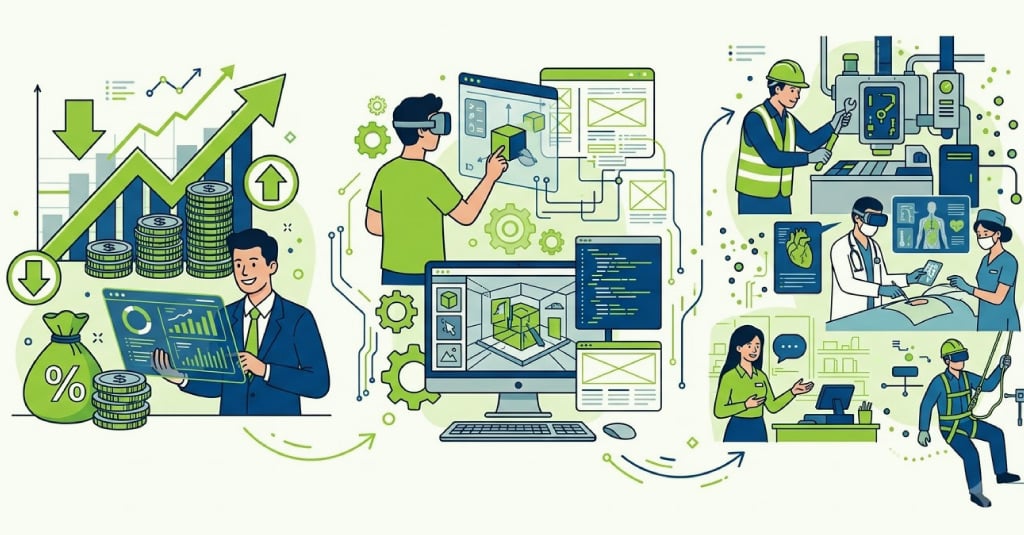





Microlearning in corporate training improves retention and on-the-job performance by delivering short, focused learning aligned to specific tasks. It works best as part of a broader learning strategy, supporting performance through just-in-time access, reinforcement, and spaced practice. When designed around clear actions and integrated into workflows, microlearning drives measurable behavior change rather than just content consumption.
Most corporate training programs do not fail because they are badly designed. They fail because they are built for a version of learning that does not reflect how people actually work. Employees in the workplace sit through hour-long sessions, absorb a fraction of the content, and return to their desks with no clear path to apply what they learned. By the following week, most of it is gone.
This blog explains what microlearning training actually is (and what it is not), when it works, how to design it for behavior change, and what enterprise L&D leaders need to get right before they scale it.

Microlearning vs. Short Courses vs. Chunked Content: What's the Real Difference?
Chunked content is a long-form course broken into smaller pieces. The material is still structured for a sequential learning journey. It is easier to navigate, but it is not microlearning.

Why Microlearning Works: The Science Behind Short, Focused Learning
Cognitive load theory, developed by educational psychologist John Sweller, offers a more credible explanation. Working memory has a limited capacity. When learners are presented with too much new information at once, the brain cannot process and store it effectively. Shorter, focused content works not because human attention spans are shrinking, but because the brain can only consolidate so much new material into long-term memory during a single session.
Microlearning works when it aligns with the way memory is encoded: one concept at a time, spaced over multiple exposures, connected to the context the learner already has.
It does not work well for introducing genuinely complex new skills that require extended cognitive effort, structured practice, and feedback over time.

What Microlearning Can (and Cannot) Build: Performance Support vs. Skill Acquisition
The Fundamental Use-Case Divide in Microlearning
Performance support covers situations where someone already has foundational knowledge and needs a quick reference at the moment of application. For example, a field technician confirming a procedure before a repair.
What Microlearning Can and Cannot Build
New skill acquisition requires something different. Learning to lead a team, developing commercial acumen, or building complex analytical capabilities cannot be delivered in three-minute bursts alone. These require structured learning experiences, practice, feedback, and reflection over time. Microlearning can support and reinforce that process, but it cannot replace it.
The organizations that get the best results from microlearning use it deliberately. They deploy it as performance support for trained skills and as reinforcement after formal learning programs. They do not use it as a substitute for foundational development.

Why Microlearning Fails as a Standalone Corporate Training Strategy
Effective microlearning sits inside a learning ecosystem. It works as a pre-learning primer before a formal training program. It works as spaced reinforcement after a classroom event. It works as just-in-time performance support at the point of need. In each case, the microlearning asset has a specific job within a larger architecture.
When microlearning is deployed in isolation, it creates a library of disconnected fragments. Learners do not know how the content connects. Managers cannot see how it relates to team performance. And L&D teams cannot measure impact beyond completion rates, which tells them almost nothing about behavior change.

Designing Microlearning for Behavior Change: Modules vs. Learning Moments
The gap between a module and a learning moment is the gap between ‘we made something short’ and ‘we changed how someone behaves at work.’
Effective microlearning for employees starts with a performance outcome, not a topic. That specificity changes everything about how the content is structured.
Four principles separate high-performing microlearning from filler:
- One objective per asset. If you need to cover three things, build three assets.
- Context before content. Show the learner the situation they will face before presenting the information.
- Action-oriented output. The learner should be able to do something different within an hour of completing the module.
- Retrieval practice built in. A short reflection, decision prompt, or scenario forces active recall, which drives retention far more effectively than passive viewing.

Microlearning Content Formats: Video, Scenarios, Infographics, and Quizzes
In many organizations, this is delivered through a bit-sized learning platform that enables quick access to focused content.
- Video works best for demonstrating a process, a behavior, or a conversation. It is weak as a reference material that the learner needs to search or revisit.
- Interactive scenarios are the highest-value format for decision-making skills and situational judgment. They require the learner to choose and receive feedback, which is the closest microlearning gets to real practice.
- Infographics suit reference material that benefits from visual structure: process steps, comparison frameworks, key data. They are not effective for building understanding of something complex.
- Quizzes and knowledge checks serve one primary purpose: retrieval practice. Used immediately after other content, they significantly improve retention. Used in isolation, they function more as an assessment than learning.

Scaling Microlearning in the Workplace: Governance, Version Control, and Discoverability
Two of the most significant are version control and discoverability.
When product processes, compliance requirements, or market conditions change, microlearning content needs to be updated quickly. Content governance frameworks, clear ownership per asset, and structured eLearning content development processes are not optional at scale.
Discoverability is equally important. The most common outcome of an unmanaged microlearning library is that employees stop searching for content because they cannot find what they need quickly enough. When microlearning requires more effort to access than simply asking a colleague, it fails its primary purpose. Tagging standards, role-based content pathways, and integration with workflow tools (Microsoft Teams, Salesforce, internal portals) determine whether a library is actually used.

How to Measure Microlearning Effectiveness Beyond Completion Rates
- Knowledge retention: short assessments at 3, 7, and 30 days post-completion to track decay and identify where reinforcement is needed
- Behavior indicators: manager observation data, call quality scores, error rates, customer satisfaction scores correlated to training activity
- Business impact: for microlearning tied to specific business processes (sales conversion, compliance incidents, customer handling time), track the process metric before and after deployment
The shift from measuring outputs (completions) to outcomes (performance change) is what transforms microlearning from a content project into a business investment. L&D teams that make this shift earn significantly more credibility with leadership and significantly more budget.

Key Takeaways & Conclusion
- Microlearning succeeds only when it is tied directly to performance.
- Misdefining microlearning leads to inconsistent and weak outcomes.
- Format should follow the task, not production ease.
- Microlearning supports performance; it does not build complex capability alone.
- Every asset must enable a clear action at work.
- Microlearning is an ecosystem layer, not a standalone strategy.
- Without governance, microlearning libraries decay quickly.
- If content is hard to find, it will not be used.
- Completion data does not equal learning impact.
If you are designing or scaling a microlearning strategy for your organization, the complexity increases significantly at the enterprise level. The decisions about content architecture, platform integration, format selection, and measurement frameworks carry real operational and financial consequences.
Upside Learning has worked with enterprise L&D teams across sectors to design microlearning programs that connect to real business outcomes. If you are at the stage where strategy, design, or scale is the challenge, it is worth having a conversation about what that looks like in practice. Book a strategy session to see how we can clear your backlog.

Frequently Asked Questions
Microlearning supports complex skill development but does not replace it. It works best for reinforcement, just-in-time support, and spaced practice within a broader learning program.
The ideal length is 3 to 7 minutes, but only if the module focuses on a single, actionable objective. Clarity of purpose matters more than strict duration.
The best format depends on the objective. Scenarios for decision-making, videos for demonstrations, infographics for reference, and quizzes for reinforcement.
Structure microlearning around real job tasks. Use pre-learning for preparation, post-learning for reinforcement, and point-of-need content for on-the-job support.
Design starts with a specific performance outcome, followed by one objective, real context, and an action-driven task.