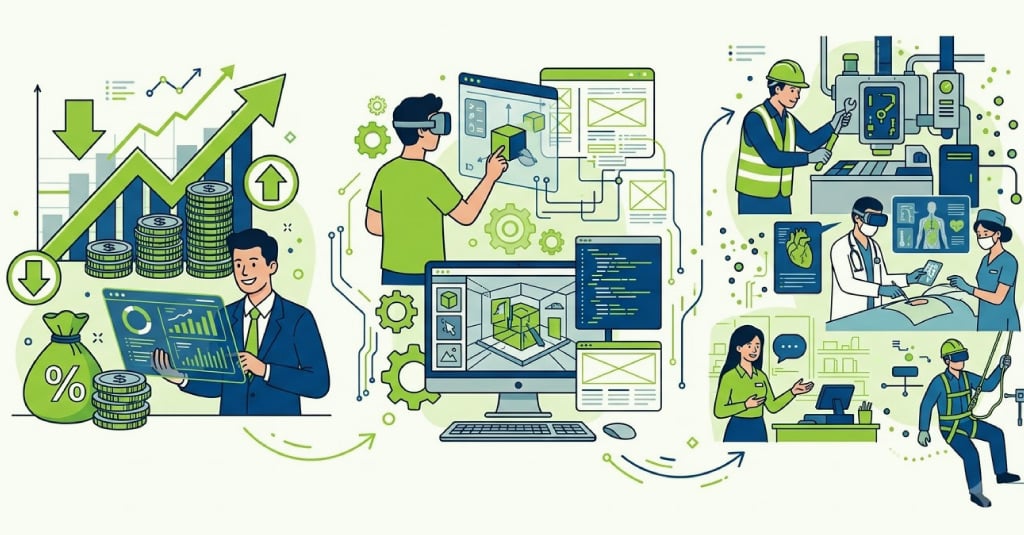





Microlearning examples that actually work in enterprise training share a few traits: a single objective, delivery under ten minutes, and a trigger tied to a real moment of need, not just a shorter version of a long course. Strong examples include point-of-need job aids, spaced-repetition product knowledge drills, scenario-based text simulations, and short video walkthroughs delivered right when an employee needs them.

Introduction
A training manager at a national retail chain once described her team’s first attempt at microlearning like this: they took a 45-minute onboarding course and chopped it into nine five-minute videos. Same content, same order, just smaller pieces. Completion rates barely moved, and neither did performance on the floor. What she’d built wasn’t microlearning. It was long-form training cut into slices.
That distinction matters more than most L&D teams realize when they’re trying to build a business case internally or brief a designer on what to actually build. This piece walks through what separates real microlearning examples from chopped-up long courses, concrete microlearning examples mapped to specific enterprise needs, how microlearning in corporate training extends beyond quick refreshers, and what it takes to deliver microlearning for employees at scale.

What Makes Microlearning Examples Work in Real Training Environments?
The strongest microlearning examples share three traits: a single learning objective, a length under ten minutes, and a delivery trigger tied to when the skill is actually needed, not just when the course happens to be scheduled. Any list of microlearning examples worth using internally should be tested against those three criteria first.
Gartner’s analysis of the microlearning platform category describes these formats as content broken into small, focused segments, typically two to fifteen minutes, aligned with just-in-time learning rather than scheduled long-form sessions. That definition rules out a lot of what gets labeled “microlearning” in practice. A five-minute video that’s really one-ninth of a longer course, with no independent objective and no trigger tied to a real task, is short content, not a genuine microlearning example. The test is simple: could an employee use this piece on its own, at the moment they need it, without having watched the eight videos before it? If not, it’s still long-form training wearing a shorter costume, not one of the genuine microlearning examples worth building.

Examples of Microlearning for Six Enterprise Learning Needs
Concrete microlearning examples look different depending on the problem they’re solving, and matching format to need is usually more important than picking the trendiest delivery method. The microlearning examples below map directly to specific enterprise needs rather than a generic “short video” template.
Six Microlearning Examples Mapped to Real Enterprise Problems
Scroll right to read more.
| Enterprise need | Example of microlearning | Why it works |
|---|---|---|
| New software rollout | 90-second video walkthrough of one feature, sent the day the update ships | Timed to the exact moment the skill is needed |
| Pharma or technical product knowledge | Spaced-repetition flashcard drills pushed over several days | Matches how memory actually consolidates over time |
| Customer service de-escalation | Branching text-based scenario simulation on a phone | Practices judgment, not just recall |
| Warehouse or field safety | One-page digital job aid pulled up at the point of task | Available exactly when the risk exists |
| Sales enablement | Daily “objection of the day” prompt tied to CRM activity | Reinforces skill in the flow of actual selling |
| Compliance refreshers | Five-question gamified quiz with a leaderboard | Keeps low-stakes recall content from feeling like a chore |
Each of these examples of microlearning solves a specific, named problem. None of them are a repurposed slice of a 40-minute course, which is the pattern that separates genuine microlearning examples from content that’s simply been made shorter.
Also Read: Microlearning for Corporate Training: Benefits & Design

Microlearning in Corporate Training: Use Cases That Go Beyond Quick Refreshers
Microlearning in corporate training earns its strongest results outside the “quick refresher” use case most people default to, in performance support, behavior change, and manager-led reinforcement that a single course was never built to deliver. These use cases are where the best microlearning examples tend to live, not in another shortened compliance video.
Performance Support
Performance support is the clearest example: a job aid pulled up mid-task isn’t a training event at all in the traditional sense; it’s help delivered exactly when a gap appears.
Behaviour Change
Behavior change is another underused case. A single ethics course rarely shifts behavior on its own, but a short monthly scenario prompt, revisited over months, builds the kind of judgment that sticks.
Manager-Led Reinforcement
Manager-led reinforcement extends microlearning even further: a five-minute huddle guide handed to frontline managers, with one skill and one practice prompt, turns a manager into a delivery channel instead of relying on the LMS alone to do the work.

How Microlearning for Employees Supports Everyday Workplace Performance
Microlearning for employees works because it meets people inside their actual workday instead of asking them to step outside it, which is exactly why format and timing matter as much as content quality in any serious microlearning in corporate training strategy.
ATD’s 2026 State of the Industry report found that average formal learning hours per employee rose to 16.7 in 2025, even as direct spending per employee fell, a squeeze that makes every training minute count more than it used to. Microlearning for employees absorbs that pressure well because it doesn’t require blocking out a training room or a half-day calendar hold. A warehouse associate can watch a 90-second clip between shifts. A field technician can pull up a job aid without leaving the job site.

Choosing a Microlearning Platform for Enterprise Delivery
A microlearning platform built for enterprise delivery needs to do more than host short videos; it needs mobile-first delivery, trigger-based push capability, and reporting that goes beyond a completion checkmark. Evaluating a micro learning platform on those three criteria alone rules out most tools still marketed as one.
Three Criteria for Evaluating an Enterprise Microlearning Platform
Look for a microlearning platform that supports spaced delivery, pushing content back to a learner days or weeks later rather than a single one-time view, since that spacing is what actually drives retention. Confirm it integrates with your existing LMS or HRIS, so completion and performance data don’t live in a third disconnected system. And check whether the platform can trigger content contextually, tied to a role change, a new policy, or a performance flag, rather than relying entirely on a fixed content calendar. A micro learning platform without that trigger capability ends up functioning like a slightly smaller LMS, which defeats much of the point.

Where eLearning Content Development Fits Into a Microlearning Strategy
eLearning content development doesn’t get simpler just because the output is short. A five-minute piece with one clear objective often takes more design discipline than a longer course with room to meander, since the best microlearning examples leave no room for filler.
Good eLearning content development for microlearning starts by identifying the single decision or action a piece needs to support, then working backward to the shortest format that supports it: video, job aid, scenario, quiz, rather than defaulting to whatever format was used last time. Microlearning content also needs a maintenance plan long courses often skip: a 90-second video tied to a specific software version goes stale the moment that version changes, so eLearning content development for this format has to build in a review cadence from the start.

When Custom eLearning Development Services Make Sense for Microlearning
Custom eLearning development services earn their cost for microlearning when the content needs to reflect your specific systems, products, or compliance requirements closely enough that a template or stock library genuinely can’t get there.
Off-the-shelf microlearning content works fine for generic soft skills or widely applicable compliance topics, the kind of examples of microlearning any stock library already covers well. It falls short the moment training needs to reference your actual CRM screens, your specific safety procedures, or a scenario built around how your teams genuinely work. That’s where custom eLearning development services justify their cost: branching scenarios built around real objections your sales team hears, job aids that match your exact equipment, or spaced drills built from your actual product catalog. The volume math also favors custom development at scale, since a real microlearning strategy usually means dozens of short pieces rather than one long course.

Key Takeaways & Conclusion
The best microlearning examples aren’t defined by length alone. A short video that’s really a slice of a longer course isn’t microlearning; a genuine example solves one problem, fits into a real moment in someone’s day, and stands on its own.
A few things worth carrying forward:
- Real microlearning examples have a single objective and a trigger tied to actual need, not just a shorter runtime
- Strong microlearning examples map to specific problems: performance support, spaced retention, behavior change, manager-led reinforcement
- Microlearning for employees works because it fits inside the workday instead of competing with it
- A microlearning platform needs spacing, triggers, and integration, not just short-video hosting
- Custom eLearning development services earn their cost once content needs to reflect your specific systems and scenarios closely
If your team is still turning long courses into shorter slices and calling it microlearning, it’s worth seeing what genuinely designed short-form training looks like instead. Explore Upside Learning microlearning design capabilities, or get in touch for a program consultation built around your specific training needs.

FAQs
For compliance, five-question gamified quizzes and scenario-based ethics prompts perform best. Sales enablement favors daily objection-handling drills tied to CRM activity. Onboarding works well as spaced job aids and short walkthroughs, delivered exactly when a new hire first encounters that task.
CLOs typically weigh content type against depth needed. High-volume, fast-changing knowledge, compliance, and product updates favor microlearning as a core delivery strategy. Foundational, judgment-heavy skills usually keep microlearning supplementary, reinforcing a longer initial course rather than replacing it entirely.
Most effective modules run two to ten minutes, with quick reference pieces often under two minutes and scenario-based practice closer to ten. Length should follow the objective’s complexity, not a fixed rule, since forcing content into an arbitrary limit undermines the format’s purpose.
Beyond completion rates, enterprises track knowledge retention through spaced quiz performance, behavior change via manager observation or performance data, and time-to-competency for new hires. The strongest programs tie specific microlearning pieces to a measurable downstream metric, not just engagement.
Anchor the case to a pilot, not the whole library: pick one high-volume course, measure completion, retention, and time-to-competency before and after converting it, then use that comparison to justify broader investment rather than requesting budget for a full-library overhaul upfront.