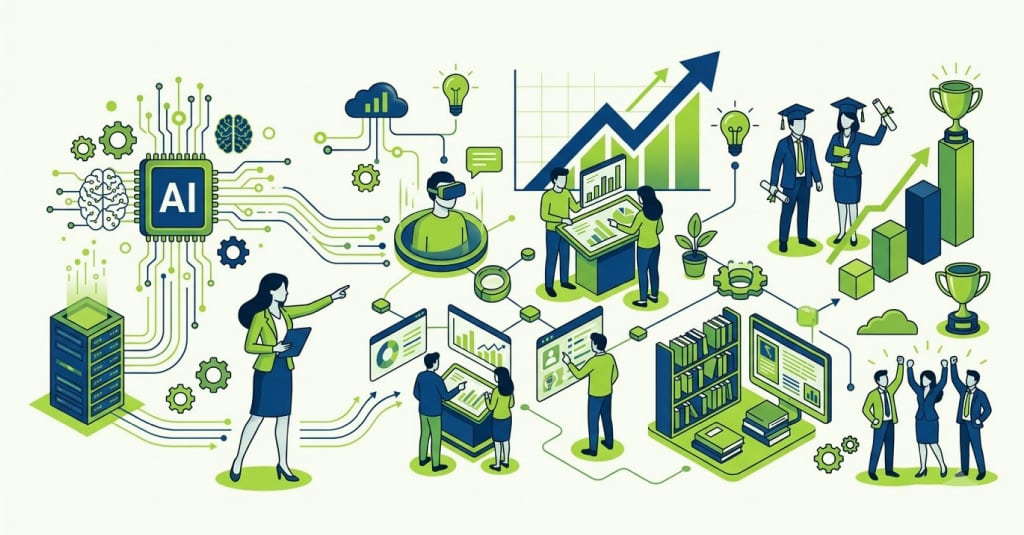





Talent development programs are structured initiatives that build employee capability against specific business needs, connecting skill-building, career growth, and workforce planning into one coherent system rather than a calendar of unrelated courses. Effective programs tie directly to a talent development strategy and workforce development programs already in motion, measured by retention, promotion readiness, and capability coverage rather than completion counts alone.

Introduction
I’ve sat in enough talent reviews to notice the same pattern repeating. A CHRO presents a slide showing dozens of active learning initiatives, leadership tracks, technical certifications, compliance modules, all running in parallel. Someone on the board asks a simple question: which of these actually changed who’s ready for what role next year? The room goes quiet. That silence is the real diagnosis. Most organizations have a training calendar wearing a strategic label, rather than talent development programs built with real intent.
The distinction matters more than it sounds. A calendar delivers content on a schedule. A program builds capability against a specific business need, tracks whether that capability actually showed up, and adjusts when it fails to. Getting this right is less about buying better content or a shinier LMS than about a design choice, made early, about what the whole system is actually optimizing for. That design choice is the entire difference between a training calendar and genuine talent development programs.

Why Talent Development Programs Must Build Capability — Not Just Skills
Talent development programs that stop at skill delivery consistently underperform the ones built around capability, and the difference between the two is easy to miss until you look closely at what each one actually measures. This is the single biggest design flaw I see repeated across talent development programs at every size of enterprise.
A skill is something a person can demonstrate in isolation: run a financial model, deliver difficult feedback, operate a piece of equipment. Capability is that skill deployed reliably, under real conditions, at the moment the business actually needs it. Plenty of talent development programs teach the skill and stop there, assuming capability follows automatically. It usually fails to. An employee who can execute a skill in a training simulation and one who can execute it during a live customer escalation, mid-shift-change, with incomplete information, are entirely different people, even though both would check the same box on a completion report.
This is the gap I’d push every CHRO to interrogate before approving next year’s budget. Talent development programs built around capability ask a harder design question up front: not “did they learn it,” but “will they actually do it when it counts.” That question changes what gets built, how it gets practiced, and how success gets measured, long before a single course goes live.

Connecting Talent Development Strategy to Business and Workforce Needs
A talent development strategy earns its name only when it’s derived from where the business is actually headed, not from a generic competency framework licensed from an outside vendor and stamped with the company logo. Talent development programs built on top of a weak strategy inherit that weakness immediately.
The strongest talent development strategies I’ve seen start with a blunt inventory: what capabilities does this business need in three years that remain unreliable today, and where are the biggest gaps concentrated. That inventory then gets cross-referenced against workforce development programs already running, because most enterprises are sitting on more existing infrastructure than they realize. The real mistake is rarely a lack of programs. It’s a lack of connective tissue between them.
Three Signals Your Talent Development Strategy Is Tied to the Business
A few signals tend to indicate a talent development strategy is genuinely tied to the business rather than running in parallel with it:
- Workforce development programs map to named business initiatives, not generic leadership competencies borrowed from an off-the-shelf framework.
- Skill gaps get prioritized by business exposure, not by which department shouts loudest during budget season.
- HR business partners can articulate the strategy in one sentence, tied to a specific outcome, not a values statement.
When a talent development strategy fails this test, it’s usually not because the content is weak. It’s because nobody built the bridge between what the business needs and what the workforce development programs are actually designed to produce.

Building a Talent Development Plan Around Critical Skills and Career Growth
A talent development plan is where strategy becomes execution, mapping specific roles to specific capability gaps and specific interventions, rather than assigning a generic curriculum to an entire job family and calling it development. This is where the abstract promise of talent development programs either becomes real or quietly dissolves into a shared drive full of unused content.
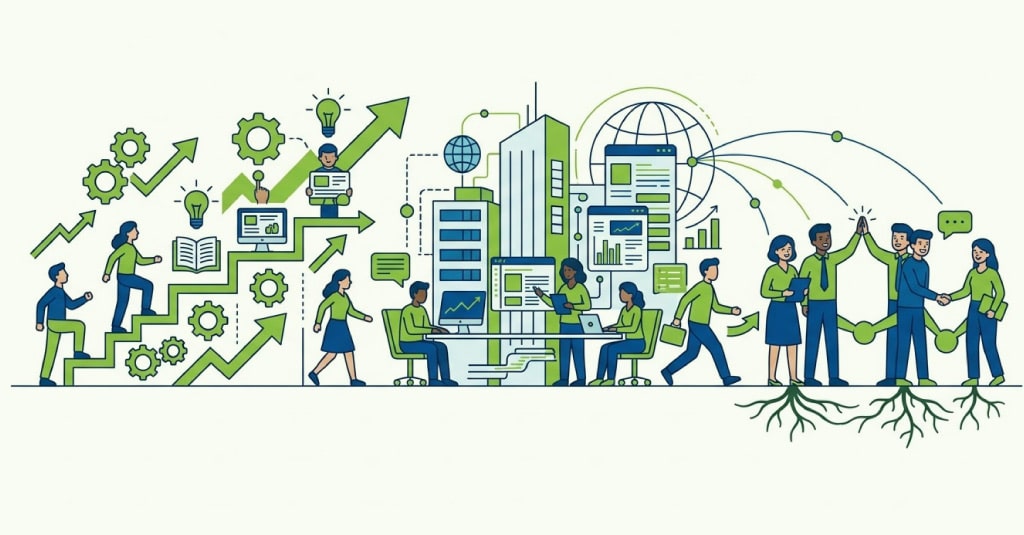
The best talent development plans I’ve reviewed treat career growth and business capability as the same problem, not two competing priorities fighting for the same training budget. An employee developing toward a critical skill the business needs is, almost by definition, also developing toward their next role. Treating these as separate tracks, one for “the business” and one for “the employee,” creates unnecessary friction and duplicate content that neither track fully owns.
Three Layers of a Practical Talent Development Plan
A practical talent development plan generally works through three layers:
- Critical skill identification, tied to the specific roles where a capability gap creates real business exposure, not a generalized list of "future skills" pulled from an industry report.
- Individualized pathing, where an employee's plan reflects their actual starting point and career interest, not a one-size curriculum assigned by job title alone.
- Manager accountability, since a talent development plan that lives entirely in an LMS dashboard, with no manager conversation attached, rarely survives contact with a busy quarter.

How Learning Experience Design Makes Talent Development Programs More Relevant
Most talent development content still gets built the old way: a course outline, a content build, a completion tracker. Learning experience design flips that order, starting with the moment an employee actually needs support and designing backwards from there, which matters enormously for talent development programs meant to build career-long capability rather than one-time compliance.
The practical impact shows up in relevance. A talent development program built around course completion treats every employee’s journey as roughly the same shape. One built around learning experience design treats the journey as genuinely individual, surfacing a leadership scenario at the moment someone actually steps into a stretch assignment, rather than months before or after the moment it would have mattered. That timing difference is often the entire gap between content that gets used and content that gets ignored.
This is a subtler point than it sounds, and it’s worth sitting with: relevance is not a content quality problem. A superbly produced course delivered at the wrong moment in someone’s development still fails. Learning experience design treats timing and context as design inputs, not afterthoughts, which is exactly the discipline traditional talent development content often skips.

Where eLearning Content Development Fits Into Modern Talent Development Programs
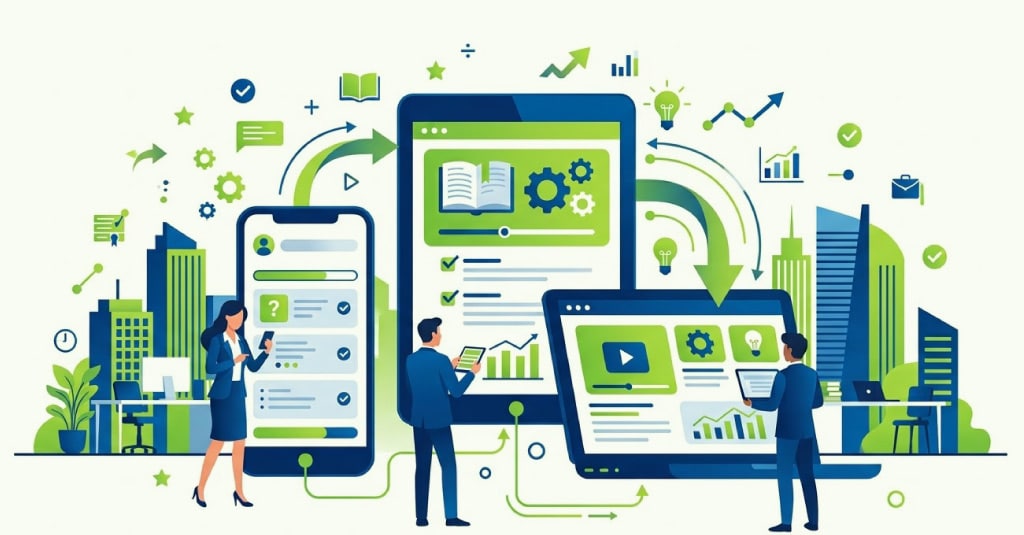
eLearning content development inside a modern talent development program looks different from the single, comprehensive course model most organizations still default to. Instead of one long leadership course covering every competency at once, eLearning content development gets broken into shorter, targeted pieces mapped to specific capability gaps and specific career stages, exactly the kind of granularity mature talent development programs depend on.
This shift is partly about pace. Business needs and role requirements change faster than an annual content refresh cycle can track, and eLearning content development built for talent development has to keep up with that speed rather than lag a year behind the roles it’s meant to prepare people for. It’s also about precision. A first-time manager and a director stepping into a P&L role need entirely different content, even when both technically fall under “leadership development” in a course catalog.
The organizations getting the most value from eLearning content development treat it as a continuously maintained asset tied to real capability gaps, not a one-time production project that gets shelved once the initial rollout is complete.
Also Read: Learning and Development Consulting: Do You Need an L&D Partner?

When Learning and Development Consulting Strengthens Talent Development Programs
Internal L&D teams are usually excellent at execution and often stretched thin on strategic design capacity, which is precisely the gap learning and development consulting exists to fill, particularly during a major overhaul of talent development programs or a fast-moving business transformation.
The honest case for learning and development consulting has nothing to do with internal teams lacking expertise. It’s that strategic design work journey mapping, capability modeling, program architecture, requires a different kind of focused time than most internal teams can protect while also keeping existing programs running. Bringing in learning and development consulting firms for that specific phase, then handing execution back to an internal team, tends to produce a stronger outcome than either extreme: fully outsourcing everything, or trying to build complex new architecture while staying fully occupied with daily operations.
The firms worth engaging share a common trait: they leave behind a talent development strategy your internal team can actually run, not a dependency that requires them indefinitely. Learning and development consulting firms that structure their engagement around your team’s long-term ownership, rather than ongoing billable hours, tend to be the ones worth a serious look.

Scaling Talent Development Programs With Managed Learning Services
Scaling a strong talent development program across a 10,000-person enterprise creates an operational load most internal teams were never staffed to absorb: content production at volume, learner support across time zones, reporting that satisfies both HR and the board. Managed learning services exist specifically to handle that load without requiring permanent headcount growth every time talent development programs expand.
Managed learning services work best when they’re layered onto workforce development programs that already have clear strategic direction, handling the execution capacity a strategy needs rather than defining the strategy itself. A CHRO trying to roll out a redesigned talent development plan across every business unit in two quarters is, in practice, facing a capacity problem as much as a design problem. Managed learning services solve the capacity side, freeing the internal team to focus on manager enablement, career conversations, and the parts of workforce development programs that genuinely require a human relationship rather than production throughput.

Key Takeaways & Conclusion
Talent development programs succeed when they’re built around capability, not just content delivery, and tied explicitly to a talent development strategy the business actually recognizes as its own. A talent development plan translates that strategy into role-specific action. Learning experience design and modern eLearning content development make the resulting talent development programs relevant at the individual level instead of generically assigned. Learning and development consulting and managed learning services both matter at the right moments, one for strategic design capacity, the other for execution at scale, but neither replaces the fundamental discipline of tying every workforce development program back to a business outcome someone can actually name.
If your organization is rethinking how talent development connects to business strategy, not just how it gets delivered, that’s exactly the conversation worth having before the next budget cycle locks in another year of disconnected initiatives instead of real talent development programs. Contact Upside Leaarning for a talent development program design consultation, and let’s talk about what capability your business actually needs built by next year.

FAQs
Start by mapping the organization’s multi-year priorities directly to named capability gaps, then build talent development plans around those gaps rather than a generic annual calendar. Review points tied to business milestones keep talent development programs adjusting as strategy shifts.
Track internal mobility and manager-reported readiness alongside completion data, then connect specific components of talent development programs to promotion outcomes over time. Programs tied to visible career progression consistently show stronger retention than programs measured by completion alone, especially among high-potential employees.
At that scale, effective programs combine a clear talent development strategy, role-specific talent development plans, and managed learning services for execution, often supported by learning and development consulting firms during the initial redesign. Centralized strategy paired with localized delivery tends to outperform either extreme.
Present capability coverage against known strategic risks, alongside retention and internal mobility data tied to program participation. Boards respond to language about competitive risk and succession readiness far more than to completion percentages or generic satisfaction scores from a survey.
Partnering makes sense when internal teams lack the protected time for strategic design work, or when a transformation timeline demands more capacity than current headcount allows. Learning and development consulting firms add the most value during a redesign, before gaps stall progress.