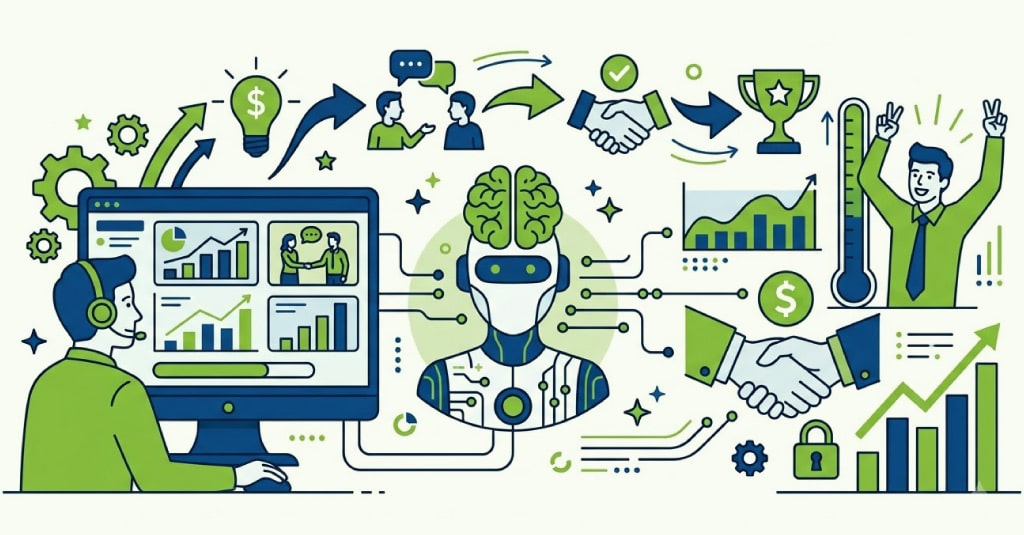





Custom eLearning for manufacturing enables organizations to deliver training tailored to their equipment, processes, and operational requirements. It helps improve safety, reduce onboarding time, close skills gaps, and maintain consistent performance across facilities. Unlike generic courses, it prepares employees for the work they actually perform, leading to better operational outcomes.

Introduction
Walk through any modern manufacturing facility, and you’ll notice that the biggest challenges aren’t always on the production floor.
New equipment arrives faster than employees can be trained. Experienced operators retire with years of practical knowledge. Safety requirements evolve, production targets increase, and manufacturers are expected to maintain consistent quality across every site.
Yet many organizations still rely on training that rarely reflects how work is actually done.
We’ve seen manufacturers invest in training, yet employees still hesitate on new equipment, supervisors correct the same mistakes, and audits continue to expose inconsistent procedures. The issue isn’t a lack of training. It’s a lack of training that’s relevant to the workplace.
That’s where custom eLearning for manufacturing makes a difference. Built around your operations and safety requirements, it prepares employees for the situations they’ll face on the job.
In this blog, we’ll explore why traditional manufacturing training falls short and how custom eLearning helps manufacturers build safer, more capable, and more productive workforces.

Why Traditional Manufacturing Training No Longer Meets Modern Workforce Needs
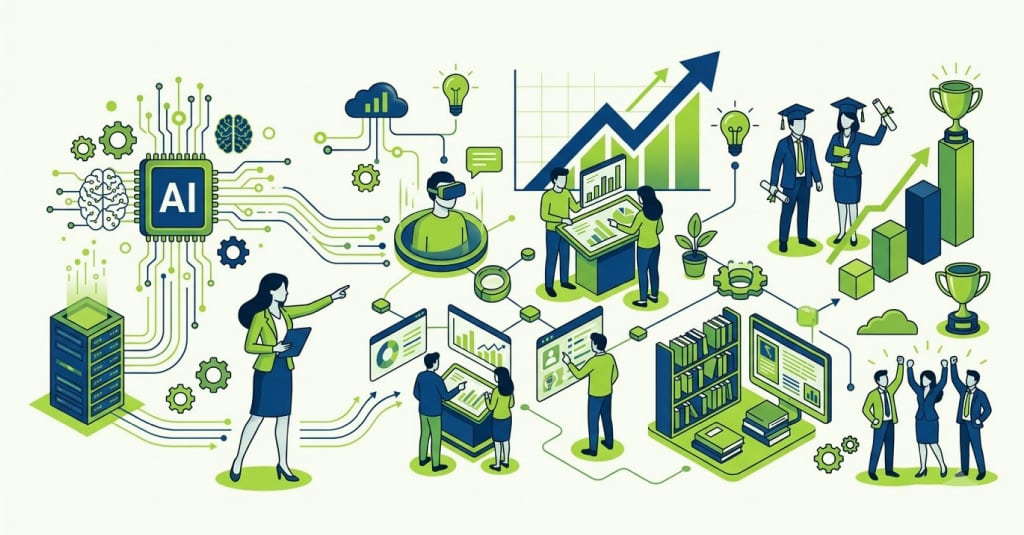
Manufacturing is changing faster than ever. Automation, connected equipment, AI-assisted operations, and continuous process improvements mean employees must learn new systems and ways of working more frequently. According to the World Economic Forum’s Future of Jobs Report 2025, technological change is expected to transform nearly 40% of workers’ core skills by 2030, making continuous reskilling a business necessity rather than an occasional initiative.
Manufacturing Is Changing Faster Than Training Can Keep Up
Many organizations still treat learning as a one-time event through induction, compliance, or annual refresher training.
But production environments don’t stand still. A new production line, updated SOP, safety procedure, or equipment upgrade can quickly make training outdated, leaving employees to rely on outdated knowledge or on-the-job corrections.
Where Traditional Training Falls Short of Custom eLearning Solutions
Traditional training often focuses on delivering information rather than preparing employees to perform effectively. Common challenges include:
- Generic content that doesn't reflect actual equipment or processes
- Limited opportunities to practice real workplace decisions
- Inconsistent training across plants or production sites
- Time-consuming updates when procedures change
- Low knowledge retention
- Little connection between learning outcomes and operational performance
Why Manufacturing Requires Continuous Workforce Development Programs
As manufacturing evolves, workforce development can’t be a one-time event. The focus shifts from completing courses to building the skills employees need to perform safely, consistently, and productively. That’s where custom eLearning for manufacturing adds value.

Common Manufacturing Training Challenges Custom eLearning Solutions Are Built to Solve
Off-the-shelf training works well for universal topics like compliance or workplace fundamentals. Manufacturing facilities differ in their equipment, workflows, SOPs, quality standards, and safety requirements, making generic courses less relevant.
Custom eLearning Solutions for Proprietary Equipment and Plant-Specific Processes
Generic courses can’t reflect company-specific equipment or operating procedures. While they may explain concepts, they rarely prepare employees for the decisions they’ll make on the shop floor. Custom eLearning for manufacturing closes this gap by using your own equipment, workflows, and SOPs, making learning directly applicable to daily work.
How Custom eLearning Development Handles Frequent SOP and Process Updates
Manufacturing processes change constantly through equipment upgrades, process improvements, regulatory changes, or new product introductions. Updating printed manuals or classroom content can be slow, while custom eLearning allows organizations to update specific modules quickly and keep training aligned with current operations.
Custom eLearning Solutions for Diverse Manufacturing Workforces
Manufacturing teams vary by role, experience, location, language, and shift. A new operator, maintenance technician, and production supervisor don’t need the same training. Custom eLearning supports role-based learning while maintaining consistent standards across the organization.
Traditional Training vs. Custom eLearning Solutions for Manufacturing
Scroll right to read more.
| Traditional Training | Custom eLearning |
|---|---|
| Generic examples | Company-specific scenarios and workflows |
| Same content for everyone | Role-based learning paths |
| Difficult to update | Modules can be updated as processes change |
| Limited scalability across sites | Consistent delivery across locations |
| Focuses on knowledge | Focuses on workplace performance |
Building Safer Workforces with Custom eLearning Development
In manufacturing, safety isn’t just a training topic. It’s a daily operational priority. The real challenge isn’t delivering safety training but ensuring employees apply it consistently under real workplace conditions.
How Custom eLearning Solutions Turn Safety Procedures into Everyday Practice
Reading about Lockout/Tagout procedures or PPE requirements isn’t the same as applying them. Custom eLearning for manufacturing places employees in realistic situations where they identify hazards, make decisions, and follow the correct procedures before they encounter them on the shop floor.
Reinforcing Safe Decisions Through Scenario-Based Learning
Interactive scenarios ask employees to assess risks, respond to equipment faults, and identify unsafe conditions in a safe environment. This reinforces safe decision-making before employees face similar situations on the job.
Using Custom eLearning Solutions to Support Safety Consistency Across Sites
For manufacturers with multiple facilities, custom eLearning helps standardize safety training while accommodating site-specific procedures. Employees receive consistent guidance without losing the flexibility to address local operational requirements.
The goal isn’t higher course completion. It’s fewer incidents, stronger safety habits, and employees who make the right decisions when they matter most.
How Custom eLearning Improves Skills, Productivity, and Operational Performance
Effective manufacturing training shouldn’t be judged by course completion alone. What matters is whether employees perform better, work more safely, and adapt to change faster. That’s where custom eLearning for manufacturing creates value.
Accelerating Time-to-Competency with Custom eLearning Development
Traditional onboarding often depends on classroom sessions, manuals, and experienced operators. Custom eLearning gives every learner access to consistent, role-specific training that they can revisit anytime, helping employees build confidence while reducing reliance on supervisors.
Standardizing Operational Excellence Across Facilities with Custom eLearning Solutions
As organizations grow, maintaining consistent operating standards becomes more difficult. Custom eLearning embeds approved workflows and quality requirements into training, ensuring employees follow the same processes regardless of location or shift.
Keeping Custom eLearning Solutions Current as Manufacturing Operations Change
Manufacturing processes constantly evolve. Custom eLearning makes it easier to update training as procedures change, keeping employees aligned with current operations while supporting initiatives such as Lean manufacturing and Six Sigma.
How Custom eLearning Solutions Connect Learning to Business Performance
Scroll right to read more.
| Learning Outcome | Operational Benefit |
|---|---|
| Faster onboarding | Employees become productive sooner |
| Consistent SOP training | Fewer process deviations |
| Better equipment knowledge | Reduced operational errors |
| Standardized learning | Greater consistency across plants |
| Ongoing skills development | Improved workforce adaptability |
When learning reflects the realities of the workplace, employees are better prepared to perform consistently, solve problems, and adapt to change.
Using Simulation-Based Learning in Custom eLearning Solutions for High-Risk Manufacturing
Some manufacturing skills can’t be mastered by reading a manual or watching a video. Operating complex machinery, troubleshooting equipment, or responding to emergencies requires practice.
Why High-Risk Skills Require Practice
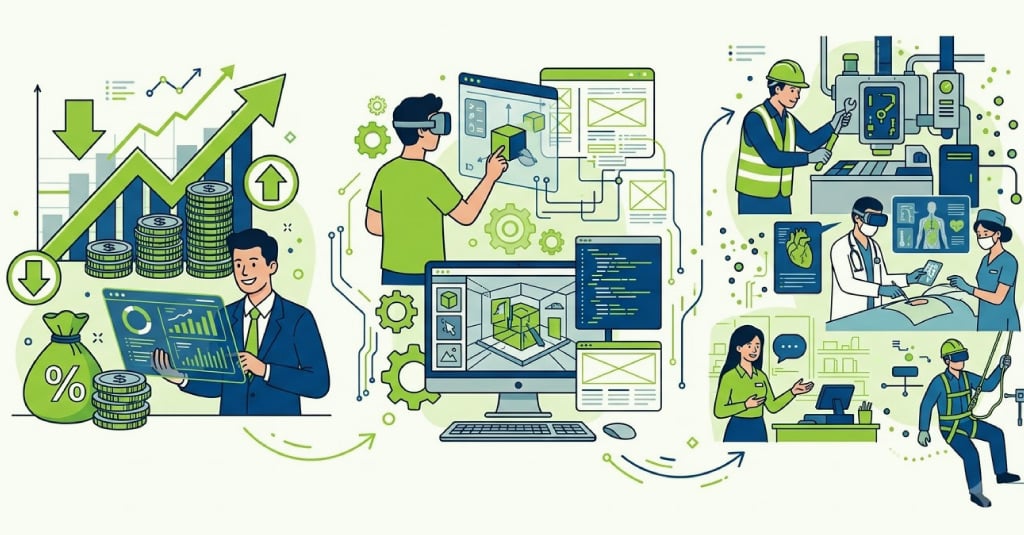
Mistakes in manufacturing can lead to safety incidents, equipment damage, production delays, and quality issues. Simulation-based learning recreates realistic scenarios where employees can make decisions, experience outcomes, and receive feedback without disrupting production or exposing themselves to unnecessary risk.
Where Simulation-Based Custom eLearning Delivers the Greatest Manufacturing Value
Manufacturers are increasingly using simulations to train employees in areas such as:
- Equipment operation and machine setup
- Preventive maintenance procedures
- Lockout/Tagout and other critical safety practices
- Emergency response and incident management
- Quality inspections and defect identification
- Troubleshooting equipment or process failures
Building Shop Floor Confidence with Custom eLearning Development
By practicing realistic situations before working on the shop floor, employees build confidence and make better decisions under pressure. Simulations don’t replace hands-on experience; they help employees arrive better prepared for it.
Manufacturing Skills That Benefit Most from Custom eLearning
Generic courses work well for broad concepts. But when training directly affects safety, quality, productivity, or compliance, custom eLearning for manufacturing delivers greater value by reflecting how work is actually performed.
Scroll right to read more.
| Skill Area | Examples |
|---|---|
| Safety | PPE, Lockout/Tagout, hazard identification, emergency response |
| Technical Operations | Machine operation, equipment setup, troubleshooting |
| Quality | Inspection procedures, defect identification, quality standards |
| Standardized learning | Greater consistency across plants |
| Maintenance | Preventive maintenance, equipment servicing, fault diagnosis |
| Compliance | Company SOPs, GMP, internal policies, audit readiness |
| Leadership | Shift supervision, coaching, performance management |
Before developing custom content, identify the skills that have the greatest impact on business performance. This keeps learning aligned with operational priorities.
Measuring the Business Impact of Custom eLearning Solutions in Manufacturing
One of the biggest mistakes organizations make is measuring learning instead of performance. Completion rates and assessment scores show who finished a course, not whether training improved safety, quality, or productivity.
Start with the business outcome you want to improve, then identify the learning indicators that support it.
| Business Goal | Training Indicator | Business Metric |
|---|---|---|
| Improve safety | Scenario performance | Reduced incident rates |
| Faster onboarding | Time to competency | Earlier independent performance |
| Improve quality | SOP proficiency | Lower defect and rework rates |
| Increase compliance | Certification completion | Better audit outcomes |
This shifts the conversation from reporting course completions to demonstrating business impact.
When Custom eLearning Solutions Are the Right Investment for Manufacturers
Custom eLearning isn’t the right answer for every training requirement. But it becomes a worthwhile investment when learning needs are closely tied to business performance.
It’s often the right choice if your organization:
- Operates across multiple manufacturing sites
- Uses proprietary equipment or production processes
- Frequently updates SOPs or compliance requirements
- Needs consistent training for a multilingual workforce
- Wants to reduce onboarding time without compromising safety
- Requires role-specific learning for different employee groups
Before starting any development project, ask a simple question:
“What business problem are we trying to solve?”
If the answer is improving safety, reducing errors, increasing consistency, or building workforce capability, custom eLearning is likely to deliver greater long-term value than a generic training solution.

Key Takeaways & Conclusion
- Manufacturing training should improve workplace performance, not just course completion.
- Generic learning works for foundational knowledge, but operational skills often require organization-specific training.
- Custom eLearning helps standardize learning across facilities while reflecting real equipment and workflows.
- Simulation-based learning gives employees a safe environment to practice high-risk tasks before performing them on the job.
- Measuring training against operational KPIs such as safety, quality, productivity, and time-to-competency provides a clearer picture of business impact.
Custom eLearning helps manufacturers connect learning directly to workplace performance.
If you’re planning to modernize your manufacturing training strategy, start with the business challenges you want learning to solve. From there, defining the right learning strategy becomes much easier. An experienced partner like Upside Learning can help you design learning that aligns with your workforce and business goals.
FAQs
The cost extends beyond training budgets. Manufacturers should evaluate safety incidents, production errors, rework, machine downtime, quality issues, onboarding time, employee turnover, and compliance risks. Looking at these operational metrics provides a clearer picture of how skill gaps affect business performance.
Start by defining the business outcome you want to improve, such as reducing incidents, shortening onboarding, or improving quality. Compare the cost of developing custom eLearning with measurable improvements in operational KPIs, including productivity, defect rates, compliance, and time-to-competency.
Legal requirements vary by country and industry. Most manufacturers train employees on workplace hazards, emergency procedures, equipment operation, personal protective equipment (PPE), and other safety practices required by local occupational health and safety regulations. They also update and deliver training whenever procedures change or new regulations take effect.
Begin by identifying the tasks employees must perform rather than simply digitizing the document. Break lengthy SOPs into smaller learning modules, use realistic workplace scenarios, and add interactive decision points. Include simulations that allow employees to practice critical procedures before applying them on the job.
Measure training alongside operational KPIs rather than learning metrics alone. Look for trends in incident frequency, near misses, audit findings, equipment errors, and time-to-competency. Combining these measures provides a more accurate view of training effectiveness than completion rates or assessment scores.