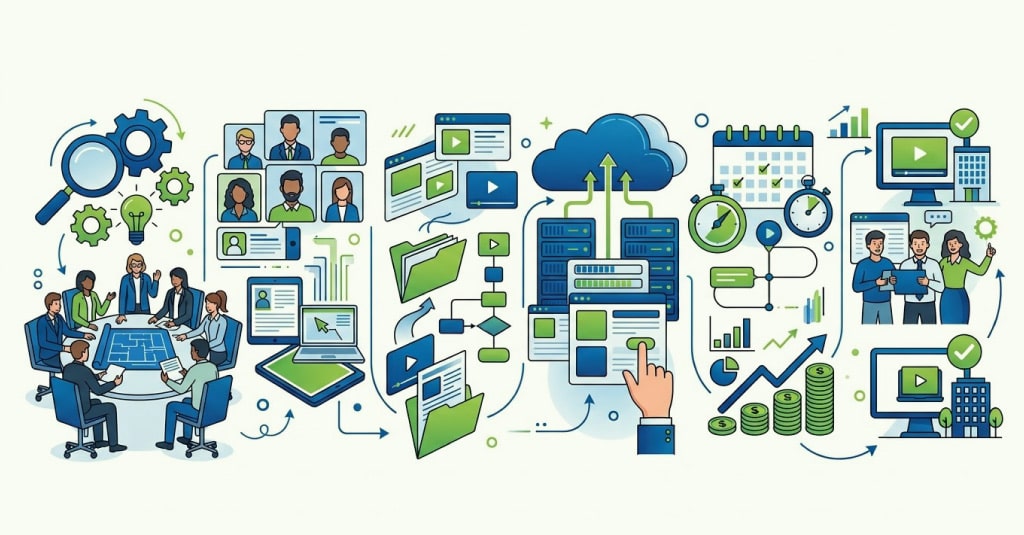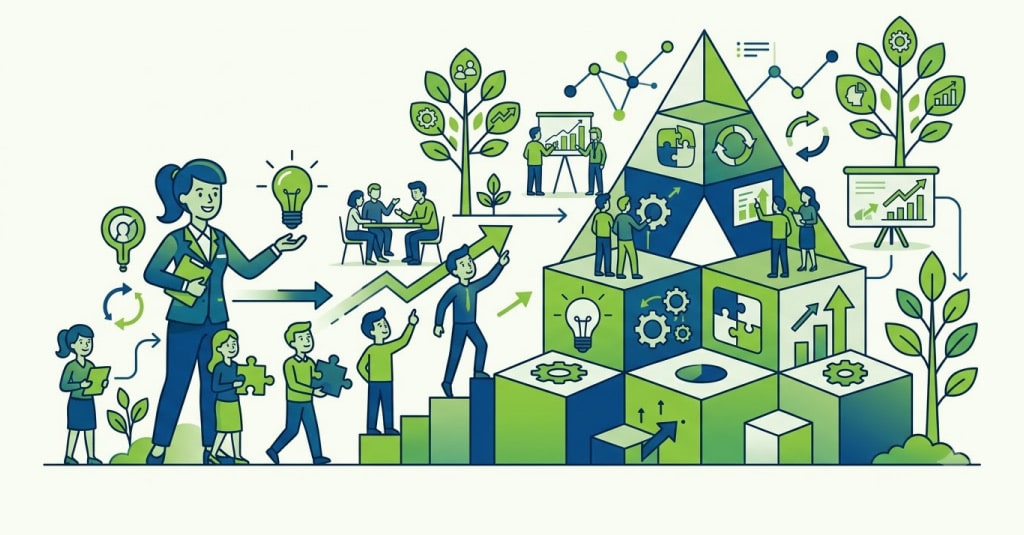





Asynchronous learning lets employees complete training on their own schedule using recorded videos, modules, and assessments instead of live sessions. For enterprises, it works best with a clear structure, manager accountability, and blended touchpoints, not left to run on autopilot, and it typically drives stronger completion than unstructured self-paced libraries.
A learning leader at a 12,000-person logistics company once said that her biggest compliance problem wasn’t content quality. It was time zones. Twenty-two countries, four shifts, one deadline. Live sessions worked for nobody, and self-paced modules sat unopened for weeks. Her team had already tried nudging people with reminder emails, and even that barely moved the needle.
That tension sits at the center of most enterprise training decisions today. Asynchronous learning promises flexibility at scale, but flexibility without design becomes a graveyard of unopened modules. Enterprises getting real results build structure around freedom: deadlines without live sessions, accountability without a trainer in the room, and content built for attention spans interrupted every four minutes.
This blog breaks down what is asynchronous learning, when it beats live training, how to design and govern it at enterprise scale, and where it fits inside a broader corporate learning strategy that has to work across time zones, shifts, and skill levels.

What Is Asynchronous Learning? Meaning and How It Compares with Synchronous Learning
Asynchronous learning means employees complete training on their own schedule, without a fixed start time or live instructor. A new hire in Manila and an employee in Chicago, for example, can complete the same onboarding program without either one joining a webinar outside their working hours.
For global and hybrid workforces, this flexibility makes it possible to deliver consistent training across time zones, shifts, and locations. It also reduces dependence on trainer availability because content can be built once and accessed by multiple cohorts when they need it.
Synchronous training, by comparison, happens live, together, and in real time. Most enterprises don’t need to choose one over the other. The better question is which format best fits the learning need.
Synchronous vs Asynchronous Learning: When to Use Each Format
scroll right to read more.
| Format | Best for | Weakness |
|---|---|---|
| Synchronous | Negotiation practice, incident drills, live troubleshooting | Doesn’t scale across time zones |
| Asynchronous | Compliance, product knowledge, process walkthroughs | Needs strong structure to drive completion |
A meta-analysis of over a thousand studies conducted for the U.S. Department of Education found that blended approaches consistently outperformed either format alone. This was never meant to be an either/or decision.
How to Build a Corporate Learning Strategy Around Asynchronous Learning
A corporate learning strategy built around asynchronous learning needs more than content. It needs architecture: what gets built once and reused everywhere, what stays live, and how progress gets tracked without a manager checking in physically.
Map your catalog against two questions: does this content change often, and does it need real-time interaction? Stable, high-volume content, compliance, and systems training belong in an asynchronous format because it scales without repeating trainer time. Structure and accountability make a measurable difference: one peer-reviewed study of a gamified, structured asynchronous curriculum found completion rates jump from roughly 30% to over 95% once peer visibility and built-in accountability were added, with no change to the content itself. Structure, not willpower, closes that gap.
How to Design eLearning Content Development for Asynchronous Learning
Asynchronous content lives or dies in its first ninety seconds. Without a live instructor to re-engage a distracted learner, eLearning content development for this format follows different rules than a classroom deck.
The shift is toward shorter, self-contained units: five to eight minutes per concept, one objective per module, a built-in check before moving on. Scenario-based branching works better than passive video because it forces a decision. Good eLearning content development also plans for interruption from the start, since context needs rebuilding in seconds, not minutes. A systematic review of assessment research found asynchronous formats were associated with higher completion and performance scores than synchronous alternatives. Enterprises that treat eLearning content development as their own discipline, rather than a shrunk-down version of classroom slides, see fewer modules abandoned three minutes in.

Asynchronous Learning Examples That Drive Better Learning Outcomes
The strongest asynchronous learning examples replace something that used to require a live room, without losing what made the live version work.
Asynchronous Learning Examples: Before and After Format Comparison
| Old format | Asynchronous Learning Examples |
|---|---|
| Live product demo call | Recorded walkthrough + scenario quiz |
| Mandatory compliance webinar | Microlearning refresher pushed before deadline |
| Scripted peer role-play | Branching sales simulation that adapts to choices |
| Printed reference manual | Searchable video library tied to performance support |
What ties these asynchronous learning examples together is that each was redesigned for the format, not simply recorded and uploaded, usually the difference between content that gets completed and content that gets ignored.

How to Choose the Right Asynchronous Learning Platforms for Enterprise Training
Not every LMS built for compliance tracking is built for genuine engagement. The right asynchronous learning platforms do more than host video.
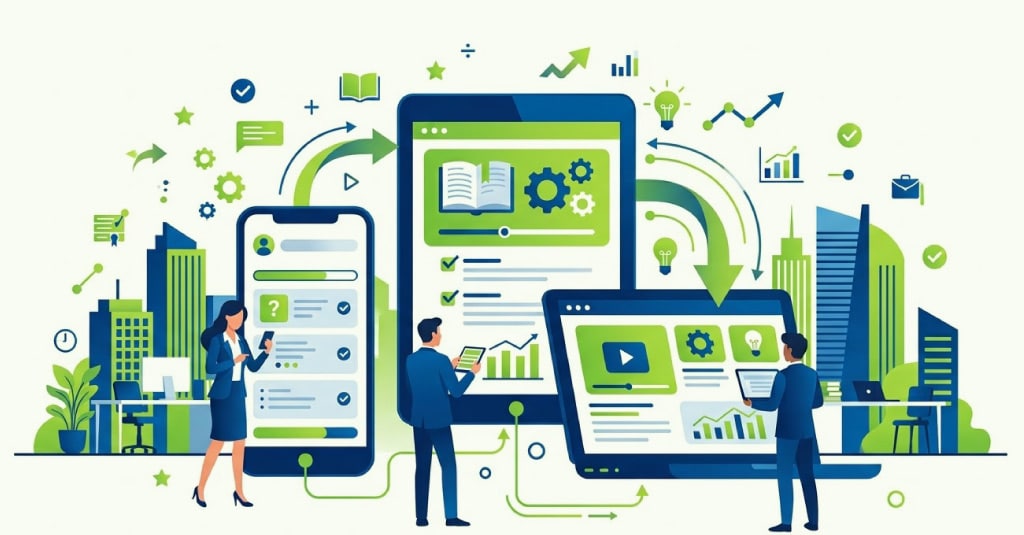
Look for adaptive sequencing, so content adjusts by role or skill gaps instead of pushing identical modules to everyone. Mobile-first delivery matters more than most checklists reflect, since much asynchronous learning now happens on phones during commutes or between shifts. Integration with your HRIS is non-negotiable if completion data should mean anything beyond a checkbox. Dashboards showing managers who’s stuck, not just who’s finished, turn asynchronous learning platforms into tools leaders actually use, rather than a system IT maintains, and nobody else opens.

How to Build Smarter Blended Learning Programs Using Asynchronous Learning
The most effective blended learning programs don’t split content 50-50. They assign each format to what it does best, then connect the two.
A practical model: asynchronous modules build foundational knowledge before a live session, freeing that time for discussion or troubleshooting instead of lecture. Post-session, asynchronous reinforcement, spaced quizzes, and job aids keep material active instead of letting it fade within weeks. This is where blended learning programs earn their name honestly: pieces designed together, not bolted on afterward. Enterprises that sequence this well will see stronger retention than those defaulting to one format, largely because each format is doing the specific job it’s actually suited for.

Key Takeaways & Conclusion
Asynchronous learning isn’t a cheaper substitute for live training. It’s the right tool for most of what enterprises teach at scale: compliance, product knowledge, onboarding, systems training. Organizations getting real ROI treat structure, not library size, as the differentiator, and they stop treating the synchronous vs asynchronous learning choice as a budget decision rather than a design one.
- Reserve live sessions for genuinely interactive work; let asynchronous learning handle everything else
- Build content in short, self-contained units designed for interruption, not lecture recordings
- Choose asynchronous learning platforms based on adaptive sequencing and manager visibility
- Sequence blended learning programs deliberately rather than splitting time arbitrarily
If your enterprise still runs on a single format by default, the gap shows up first in completion rates and later in the skills nobody flagged as missing until an audit or an incident forced the question. Upside Learning designs custom eLearning and blended learning programs built around how your workforce actually learns, across time zones, shifts, and roles. Let’s talk about what that could look like for your team.

Frequently Asked Questions
Asynchronous learning meaning: employees complete training independently, using recorded videos, modules, and assessments, without a live instructor or fixed schedule. It decouples access from availability; content stays open, employees progress at their own pace, and systems track completion and performance automatically in the background.
Enterprises track completion rates, time-to-competency, and post-training performance data rather than just views or logins. The strongest signal is behavior change on the job, error reduction, or faster ramp time, tied back to specific modules through LMS and performance system integration.
It’s more effective for stable, high-volume content like compliance, product knowledge, or systems training, where employees benefit from pausing and applying material immediately. Live training still wins for negotiation, role-play, or troubleshooting, where real-time feedback meaningfully changes the outcome for the learner.
Programs need version control, accessibility compliance, consistent instructional design standards, and regular content audits tied to policy or product changes. Governance should also define who owns updates, how often content gets reviewed, and how completion data feeds into audit reporting.
They build short, self-contained modules with clear deadlines, manager visibility into progress, and built-in accountability like nudges or milestone tracking. Completion is driven by structure and relevance to the employee’s actual role, not by mandatory scheduling or compliance pressure alone.