




Most enterprise learning platforms begin microlearning programs with clear intent. Teams want faster updates, shorter learning cycles, and content that employees can access without leaving their workflow. Early results usually look promising. Production speeds increase. Content is easier to update. Business units begin contributing their own modules.
After a year or two, the situation begins to change. The learning platform now holds hundreds of small assets created by different teams. Employees know the content exists, yet locating the right piece at the right moment becomes harder than expected. Learning leaders start noticing another pattern as well. Microlearning is everywhere in the system, but it does not always connect to roles, capabilities, or long-term development goals.
This pattern appears across many enterprise digital learning environments. The issue is rarely the idea of microlearning itself. The issue is how microlearning grows inside large organizations.

Why Microlearning Libraries Often Fragment Across Business Units
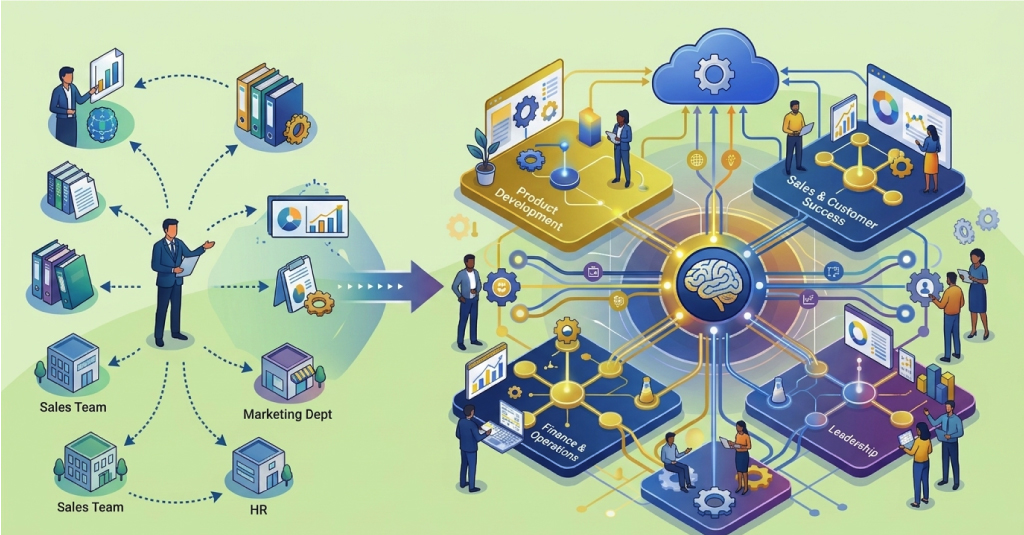
Microlearning rarely begins as a centrally managed program. In most organizations, it grows from operational needs inside departments. A sales team launches quick modules for product releases. Compliance teams publish short regulatory updates. Operations build refreshers for process changes.
Each module solves a specific problem at the moment it is created. Over time, however, those modules accumulate across departments.
A common pattern begins to appear:
- Sales training libraries built around product cycles
- Compliance modules created whenever regulations change
- Operational training tied to internal process updates
- Customer support teams adding their own troubleshooting modules
None of these initiatives are incorrect. The challenge appears later when employees attempt to navigate the combined learning environment. Multiple modules may address similar topics yet belong to completely different program structures.
Once fragmentation starts, another issue usually surfaces. Employees begin relying heavily on search to find training.

Why Microlearning Content Becomes Hard to Find in Enterprise Learning Platforms
Search works well only when content is consistently labeled. In enterprise learning platforms, that consistency often disappears as more departments begin publishing training.
Some teams label modules by topic. Others tag content by department or project name. In a large LMS environment, those differences quickly multiply.
In one enterprise system review, a search for a process update returned more than thirty results. Several modules addressed the same topic but were tagged differently, making it difficult for employees to identify which version was current.
When discovery begins to fail, microlearning loses one of its biggest advantages. Quick access.
Over time, the problem moves beyond search and begins affecting retention.
Reinforcement Decay in Microlearning Programs
Microlearning is effective when employees can immediately apply what they learn. Short modules support quick updates and immediate references during daily work.
The difficulty appears after the initial learning moment.
Short-term reinforcement patterns
Employees complete the module. They understand the concept. The learning experience itself is usually clear.
However, many programs stop at that point. There is no structured follow-up or reinforcement tied to the same skill area. Over time, the knowledge fades, even though the module still exists in the learning system.
Long-term retention gaps
Several months later, employees may remember that a training module exists but struggle to recall the exact process or rule. The learning platform begins functioning more like a reference library than a reinforcement system.
At this stage, learning leaders often turn to reporting data to understand whether training is working.
That introduces another challenge.

Why Microlearning Measurement Often Stops at Completion
Most enterprise LMS platforms track completion data reliably. Microlearning modules are short, so completion rates often look strong in dashboards.
The difficulty is interpreting what those numbers actually represent.
For many organizations, measurement challenges appear in subtle ways:
- Completion rates show activity, but not capability development
- Micro modules are not mapped clearly to defined skill areas
- Reporting systems capture participation but rarely long-term performance impact
A financial services organization, for example, may deploy several short compliance modules after a regulatory update. Employees complete them quickly. Yet months later, internal audits still identify gaps in understanding.
Training existed. Measurement never connected the learning activity to real capability outcomes.
When learning teams reach this point, they usually notice another issue emerging at the same time.
Microlearning production has grown faster than the structure designed to support it.

When Microlearning Production Outpaces Learning Structure
Short modules are easier to produce than traditional courses. That efficiency encourages rapid expansion. Over time, learning teams may release dozens of microlearning assets each quarter.
Without coordination, the learning environment begins to show signs of overload.
Some organizations start noticing patterns like these:
- Multiple departments publishing training on similar topics
- Overlapping modules explaining the same processes
- Employees unsure which content represents the most current guidance
The issue is no longer the speed of content creation. The issue becomes organizational.
At this stage, governance begins to play a larger role.

How Governance Keeps Enterprise Microlearning Programs Usable
Governance does not restrict content creation. Instead, it provides the structure needed to keep growing learning libraries usable.
Organizations that manage microlearning successfully often introduce a few practical practices over time.
Clear tagging standards are one example. When departments follow consistent labeling rules, search becomes far more reliable. Content ownership is another factor. When teams know who is responsible for updates, outdated modules disappear faster.
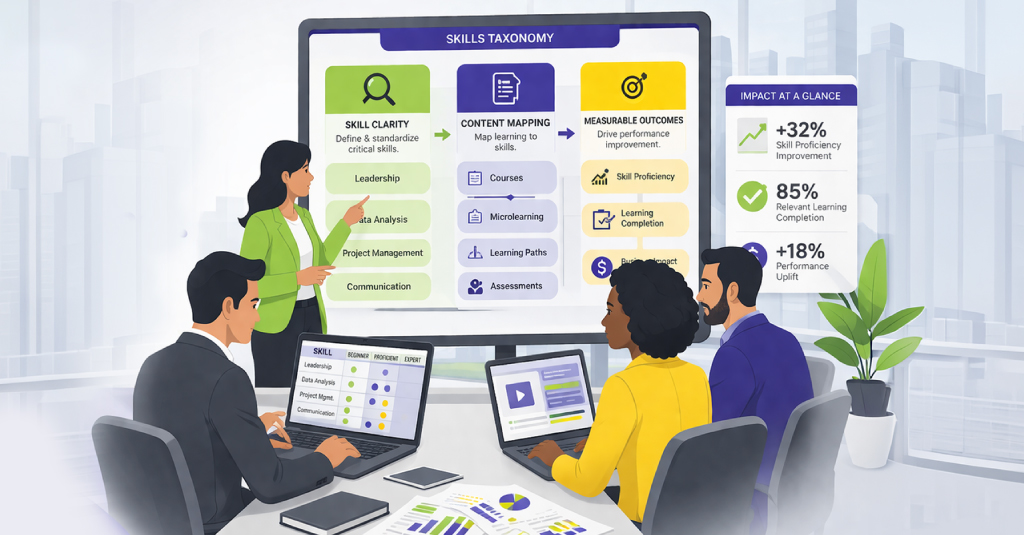
Many enterprises also begin linking microlearning modules to broader skill areas. That connection allows leaders to see how short training pieces contribute to wider organizational learning transformation efforts.
Once these structures are in place, microlearning can continue expanding without becoming chaotic.
This is usually the stage where external learning partners become part of the conversation.

How Upside Learning Helps Structure Enterprise Microlearning
Organizations often reach a point where producing microlearning is no longer a challenge. The challenge becomes structured.
Upside Learning works with organizations navigating this stage of enterprise digital learning growth. As a provider of custom eLearning and digital learning solutions, the focus is not only on creating new modules but also on helping organizations organize large microlearning ecosystems.
Typical support areas include:
- Designing structured microlearning frameworks across departments
- Aligning learning assets with broader digital learning transformation initiatives
- Connecting microlearning libraries with enterprise learning platforms
- Improving visibility into how training supports organizational learning transformation
Through custom eLearning design and consulting, organizations can reorganize existing microlearning libraries while continuing to expand them.
In large organizations, that balance between flexibility and structure determines whether microlearning remains useful over time.
If your organization is facing similar challenges while scaling microlearning, the team at Upside Learning can help design structured custom eLearning solutions that keep enterprise learning systems organized and effective.
Contact Upside Learning to explore how your microlearning strategy can evolve into a sustainable digital learning transformation.

Frequently Asked Questions about Pharma Workforce Training
Pharma workforce skill readiness refers to employees’ ability to apply technical knowledge and regulatory procedures during real operational work. It focuses on execution capability rather than training completion, ensuring employees perform consistently in manufacturing, quality, and compliance environments.
Traditional training focuses on knowledge delivery and course completion. Employees learn procedures but rarely practice applying them in operational contexts. Without contextual training or performance feedback, organizations struggle to convert a learning strategy into reliable execution.
Skills represent individual knowledge units such as understanding GMP training principles. Capabilities combine multiple skills and apply them within operational workflows. Pharmaceutical environments require capabilities because employees must interpret procedures and act correctly during real manufacturing and quality scenarios.
Companies can build capability through contextual learning and scenario-based simulations. Expert-led training and capability mapping also help. Integrating learning with quality data reveals workforce skill gaps.
Capability-based metrics measure operational performance rather than training activity. Indicators such as time-to-proficiency, deviation reduction, and inspection readiness show training impact. They confirm whether employees apply procedures correctly in regulated operations.
Pharmaceutical workforce training programs stand at a turning point. Traditional knowledge-based training remains necessary for compliance documentation. However, knowledge delivery alone cannot ensure operational readiness.