



Pharmaceutical workforce training can no longer rely only on knowledge delivery. Regulated environments demand reliable execution. Employees must apply procedures correctly across manufacturing, documentation, and quality processes. Capability-driven training builds that execution readiness. Organizations that build real capability often see fewer deviations. Compliance performance improves. Operations also become more consistent.

Key Takeaways
- Training completion does not guarantee operational capability in regulated environments.
- Pharma organizations face a persistent knowledge–execution gap.
- Capability-driven training focuses on applying skills within real operational contexts.
- Integrated learning ecosystems connect training systems with quality and operational data.
- Performance metrics such as time-to-proficiency and deviation reduction indicate real workforce readiness.
Pharmaceutical organizations operate in one of the most complex regulated industries. Inspections require clear evidence that employees can execute procedures accurately. At the same time, new therapies and digital manufacturing systems are increasing operational complexity. Global production also adds new challenges.
Despite major investments in workforce training programs, many companies still experience documentation inconsistencies, manufacturing deviations, and quality errors. These issues often appear even when employees complete required pharmaceutical training courses. The problem sits with training design.
Modern pharma operations require something different. Employees must demonstrate consistent execution capability.
Closing this gap requires a shift from course-centric training to capability-driven workforce development.

Operational environments often reveal a gap between training completion and real-world performance.
Common operational challenges include:
- Documentation inconsistencies in batch records
- Manufacturing deviations during process execution
- Procedural errors in quality documentation
- Inconsistent interpretation of standard operating procedures
These issues increase regulatory risk. They also create operational delays and investigation cycles.
Training completion shows exposure to procedures. It does not confirm employees can execute those procedures during complex operational workflows.

The Knowledge–Execution Gap in Pharma Training
The knowledge–execution gap refers to the difference between understanding procedures during training and applying them consistently during real operational work.
Many pharmaceutical organizations face this gap between what employees learn and what they execute during operational tasks.
Real operations introduce complexity. Production timelines create pressure. Multiple teams must coordinate activities. Unexpected deviations also occur.
Employees must manage situations such as:
- Interpreting SOP guidance when conditions change
- Managing deviations during manufacturing runs
- Coordinating actions between production and quality teams
- Maintaining documentation accuracy during active production
These situations require judgment, coordination, and contextual understanding. Knowledge alone does not guarantee reliable execution.
Most pharmaceutical training systems have evolved to support regulatory documentation.
As a result, many systems focus on activities such as:
- Course delivery and certification tracking
- Compliance documentation for audits
- Learning management systems designed for record keeping
However, pharmaceutical training courses often fail to ensure employees can apply knowledge consistently during operational tasks.
Scroll right to read more.
| Traditional Model | Capability Model |
|---|---|
| Course completion metrics | Workforce proficiency metrics |
| Content libraries | Contextual learning environments |
| Compliance documentation | Operational skill readiness |
| Standalone LMS platforms | Integrated capability ecosystems |
Modern pharmaceutical environments require training systems that build execution capability, not only knowledge access.

Skills vs Capabilities in Pharmaceutical Workforce Development
Understanding the difference between skills and capabilities explains why many training initiatives fail to improve operational performance.
- Skill - A discrete knowledge unit such as understanding Good Manufacturing Practice principles or regulatory guidelines.
- Capability - The ability to combine multiple skills and apply them effectively within real operational workflows.
Consider a simple example.
Skill – Understanding regulatory documentation rules.
Capability – Applying those documentation standards consistently during batch production and quality review processes.
Industry research highlights the impact of this gap. A PwC analysis of pharmaceutical quality environments reports that more than 80% of process deviations in pharmaceutical manufacturing are linked to human error or execution issues.
Operational environments rarely require isolated knowledge. Employees must combine process knowledge, judgment, and collaboration.
Organizations that train only for knowledge acquisition build familiarity with procedures. They do not always build execution capability.

Designing Capability-Driven Pharma Training Programs
Capability-driven workforce development and upskilling require training programs designed around operational outcomes.
Three principles guide effective capability development.
Capability Mapping
Organizations must identify capabilities required for critical operations such as manufacturing execution, deviation investigation, quality review, and regulatory documentation.
Capability mapping ensures training aligns with operational priorities.
Contextual Learning
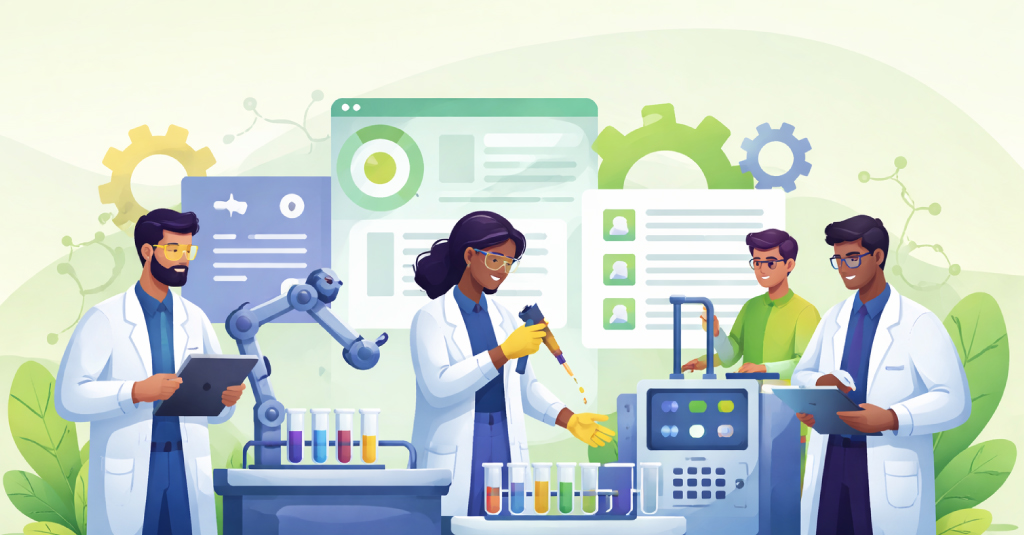
Employees develop stronger proficiency when learning environments mirror real work scenarios.
Scenario-based training allows teams to practice applying procedures in realistic situations. This approach improves decision-making and operational confidence.
Expert-Led Development
Subject matter experts bring operational context that training materials often miss.
When experienced practitioners guide training sessions, employees gain insights that support continuous upskilling during real manufacturing workflows.
These approaches transform training from knowledge transfer into capability development. If you want to explore how organizations can systematically identify and develop critical skills, download our eBook Skilling for Performance: A Strategic Imperative for Organizations.

Architecture of an Audit-Ready Pharma Learning Ecosystem
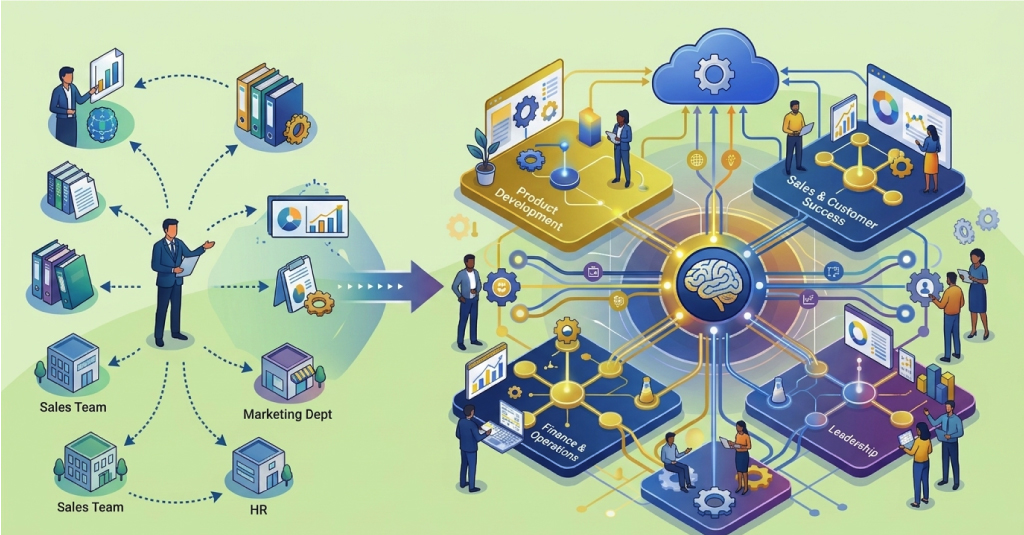
Capability-driven workforce development requires more than better training programs. It requires an integrated learning ecosystem.
Three system layers enable this transformation.
Learning Systems
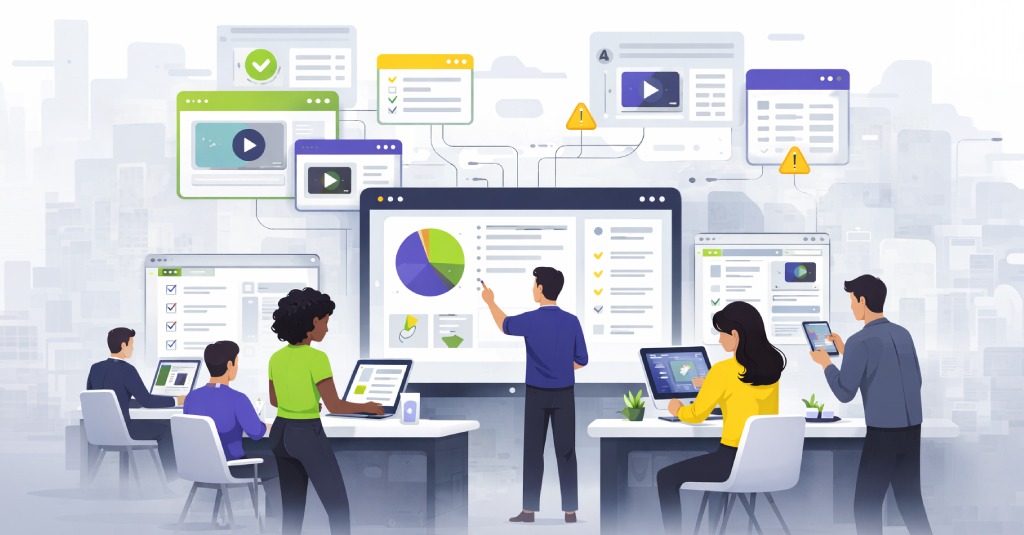
Digital learning platforms deliver structured learning paths, simulations, and capability development programs. These systems guide employees through progressive training experiences.
Quality Management Systems
Integration with quality systems ensures training aligns with current SOPs, validation requirements, and regulatory procedures.
When procedures change, training updates must follow immediately.
Workforce Capability Analytics
Workforce capability analytics help organizations identify skill gaps using operational performance data. These signals may include deviation trends, documentation errors, process adherence data, and audit observations. When learning systems connect with quality data, training becomes more targeted and aligned with operational needs. Leaders gain clearer visibility into workforce capability and can address gaps before they affect compliance or production.
AI and Learning Analytics in Workforce Development
Artificial intelligence and learning analytics now play an important role in workforce capability development. They help organizations move beyond basic training tracking.
Modern learning systems analyze multiple data sources. These include training performance, operational metrics, and workforce skill profiles. This data helps organizations identify capability gaps. Learning teams can then design targeted upskilling programs for specific roles or operational processes.
If you want to explore this topic further, read our detailed guide on AI-powered skill gap analysis in enterprise learning.

Measuring Workforce Skill Readiness in Pharmaceutical Organizations
Metrics from workforce training programs rarely reflect real workforce capability. Completion rates and training hours provide limited operational insight.
Capability-driven organizations measure workforce readiness through operational indicators.
- Time-to-Proficiency- This measures how quickly employees become confident and capable in regulated roles. Faster learning helps teams work independently sooner and reduces onboarding risks.
- Deviation Reduction - When employees understand procedures clearly, errors decrease. Fewer manufacturing or documentation deviations often indicate stronger workforce capability.
- Quality Performance Metrics - Organizations monitor documentation accuracy, SOP adherence, and investigation outcomes to evaluate workforce performance.
- Inspection Readiness - Strong training programs often lead to fewer regulatory observations during inspections.
These metrics show how workforce development supports operations and compliance.

Frequently Asked Questions about Pharma Workforce Training
Pharma workforce skill readiness refers to employees’ ability to apply technical knowledge and regulatory procedures during real operational work. It focuses on execution capability rather than training completion, ensuring employees perform consistently in manufacturing, quality, and compliance environments.
Traditional training focuses on knowledge delivery and course completion. Employees learn procedures but rarely practice applying them in operational contexts. Without contextual training or performance feedback, organizations struggle to convert a learning strategy into reliable execution.
Skills represent individual knowledge units such as understanding GMP training principles. Capabilities combine multiple skills and apply them within operational workflows. Pharmaceutical environments require capabilities because employees must interpret procedures and act correctly during real manufacturing and quality scenarios.
Companies can build capability through contextual learning and scenario-based simulations. Expert-led training and capability mapping also help. Integrating learning with quality data reveals workforce skill gaps.
Capability-based metrics measure operational performance rather than training activity. Indicators such as time-to-proficiency, deviation reduction, and inspection readiness show training impact. They confirm whether employees apply procedures correctly in regulated operations.
Pharmaceutical workforce training programs stand at a turning point. Traditional knowledge-based training remains necessary for compliance documentation. However, knowledge delivery alone cannot ensure operational readiness.
Upside Learning’s capability-driven workforce development addresses this challenge. It connects learning platforms with operational systems and workforce analytics.
Organizations that adopt this approach build capable workforces. Employees execute procedures reliably, maintain compliance, and adapt to evolving pharmaceutical operations. Talk to our learning experts about building capability-driven pharma workforce training programs.