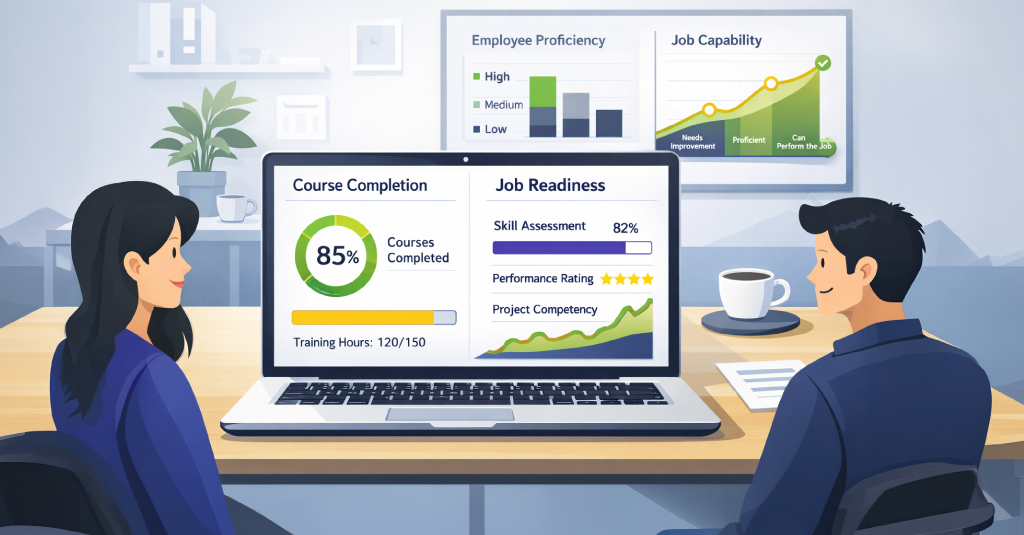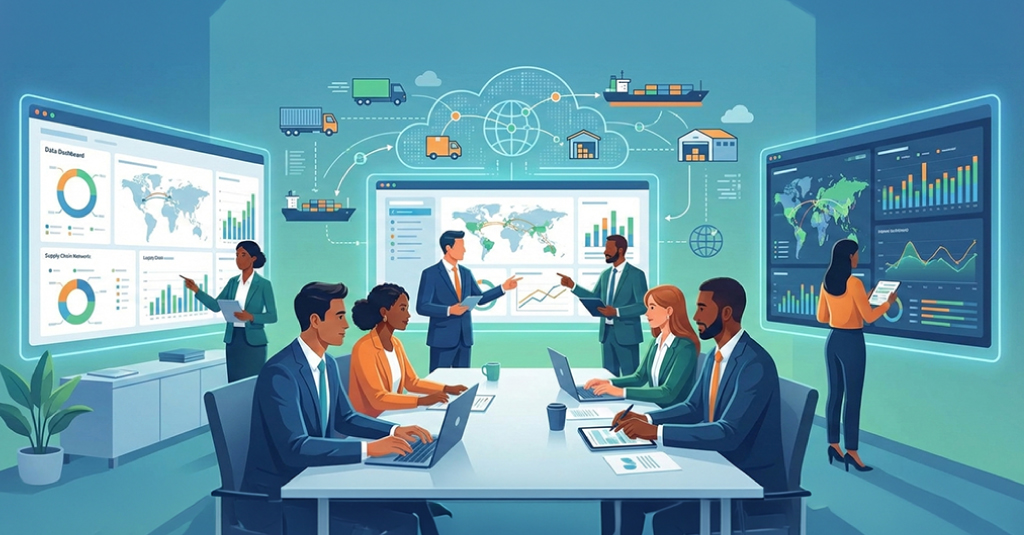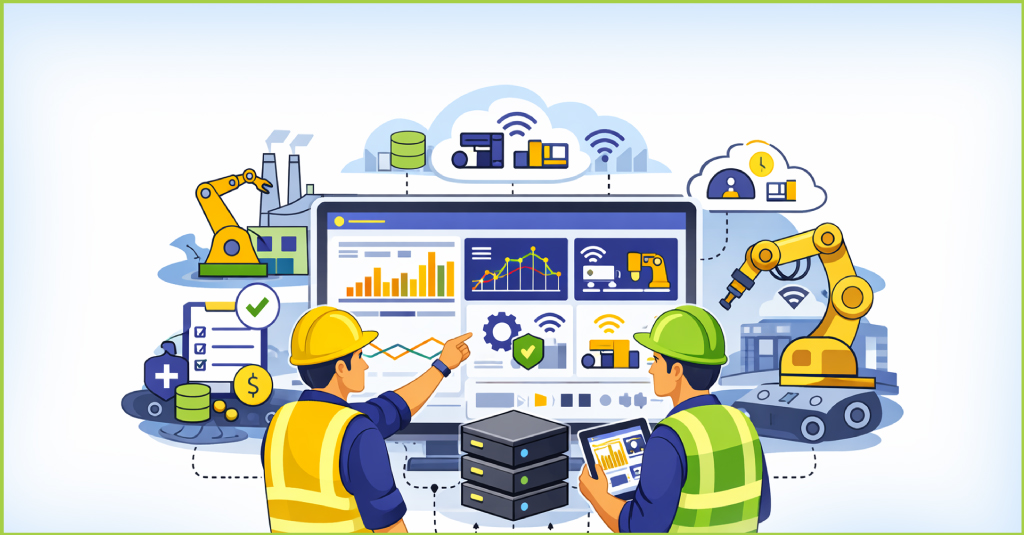





In most large organizations, training metrics settle quickly once programs reach scale. Completion rates level out; learner feedback clusters within expected ranges, and certification volumes follow predictable patterns from cycle to cycle.
Day-to-day operations rarely show the same consistency. Managers continue to escalate familiar issues; quality fixes happen outside formal learning, and teams rely on workarounds long after training has been rolled out.
This gap is not unusual. It reflects the difference between what training metrics are designed to capture and what actually shifts behavior inside live work environments.
In this article, the focus stays on where that difference comes from, how learning design changes when performance is treated as the anchor, and what organizations tend to notice when training is connected more closely to real work.

Why Most Corporate Training Does Not Change Behavior at Work
In many enterprise environments, there is an unspoken belief that once people complete training, behavior will follow. The assumption shows quietly in planning documents and review meetings, where completion numbers are treated as early proof that learning has landed.
What tends to surface later is a different pattern, where employees return to work that has not changed around them, and old habits reappear faster than expected.
- Most employee training programs are completed in controlled settings, while performance problems surface inside busy workflows, under time pressure, and across multiple systems. People may understand a process during training, but when the same decision appears weeks later in live work, recall competes with speed, habit, and peer behavior.
- Corporate learning solutions often compress policies, rules, and exceptions into single programs to stay efficient, which increases cognitive load in practice. Employees remember parts of what was taught, but rarely enough to apply it confidently when conditions are imperfect, which they usually are.
- Teams are rewarded for throughput and consistency, not for slowing down to apply new practices, which is why informal workarounds quietly replace formal learning, especially during system rollouts or process changes.
Over time, focusing only on why training falls short starts to feel incomplete. The question that lingers is less about failure and more about what learning would look like if it were shaped around how work actually unfolds.

Designing Learning Around Performance in the Flow of Work
Once it becomes clear that completion does not reliably translate into changed behavior, the next question tends to surface on its own. If training is not failing outright, then what it should be designed around becomes harder to ignore.
In most organizations, the answer remains content. Content is easier to define, easier to build, and easier to track, even when it explains very little about how work actually gets done.
Performance-aligned learning design shifts that starting point by paying closer attention to how work unfolds in practice. Instead of organizing learning around topics or courses, design decisions begin with what a role requires people to notice, decide, and act on during real situations.
This is often where gaps start to show. Teams complete training on time, yet familiar issues continue because the learning never addressed the judgment call where errors usually begin, especially when the correct response depends on context rather than rules.
As design moves closer to work, timing begins to matter more than coverage. When a decision happens occasionally, formal instruction can help. When the same choice appears repeatedly throughout the day, learning needs to sit closer to the workflow, even if that means leaving some content out.
From there, context becomes harder to ignore. Learning that overlooks system constraints or local process variations rarely holds once work resumes, which is why people adapt what they were taught to fit reality, often without noticing the shift.
In some cases, these adjustments begin to show up as small shifts in performance, though not always in obvious ways.

Connecting Training to Business Outcomes Without Forcing the Link
Once learning is designed closer to work, questions about outcomes tend to surface sooner than expected.
Leaders want to know whether performance is improving, but traditional training metrics offer limited help. Completion rates, satisfaction scores, and assessments still describe activity, yet they say very little about what changes once work resumes.
The difficulty becomes clearer when teams try to connect training activity directly to business results, only to find that outcomes move slowly and rarely shift for a single reason. Most measures reflect a mix of influences, many of which sit well outside the training itself.
Once teams start paying attention, the limits tend to surface in familiar ways:
- Business numbers do move, but often long after the training, and rarely for reasons that are easy to isolate.
- Early signals sound promising at first, until different teams start disagreeing on what should even count as a signal.
- Learning data integration helps most when it stays close to specific actions and becomes less useful once it is averaged too broadly.
- In some roles or situations, improvements show clearly, while others see little change at all.
- Things get harder to explain once system updates or staffing shifts enter the picture at the same time.
Over time, teams tend to become more careful about how much weight they give measurement. It helps point toward movement, but it rarely settles debates on its own, which is often when attention turns toward who is shaping the learning in the first place.

What to Look for in a Training Partner at the Enterprise Level
Conversations with a custom eLearning vendor often take shape quickly. Early meetings tend to revolve around formats, delivery timelines, and how fast programs can be rolled out. In some cases, this urgency is driven by quarterly pressure. In others, it follows an upcoming audit or a previous initiative that launched without producing visible change. Speed, in those moments, starts to stand in for progress.
The sequence is familiar. Programs go live on schedule; participation numbers look healthy, and initial feedback stays positive. A few months later, operational reviews surface the same issues that prompted training in the first place. The effort was concentrated on launching learning rather than on shaping what people would actually do differently once work resumed.
Over time, a different pattern becomes easier to notice. Some partners slow these early conversations down and spend more time understanding how roles function, where decisions tend to break under pressure, and which parts of the workflow people routinely work around. The discussion shifts away from delivery mechanics and toward how learning intersects with real moments on the job.
When that happens, other signals begin to matter. Whether the partner can stay consistent across L&D, business leaders, and frontline teams. Whether uncertainty is acknowledged instead of smoothing over. Whether enterprise constraints are treated as inputs to design rather than exceptions to work around.
At that point, choices tend to narrow without much effort. Not because options are formally compared, but because some approaches no longer fit the reality the organization is dealing with.

How Upside Learning Approaches Performance-Linked Training at Enterprise Scale
By the time organizations narrow their partner options, the difference often lies less in what is promised and more in how the work is approached once conversations begin. Some partners stay close to content decisions. Others spend more time understanding roles, decision pressure, and where work tends to break under real conditions.
This second approach usually starts upstream of any build activity. Conversations focus on how work actually functions, where judgment matters most, and which constraints are unlikely to change. Design choices follow from that understanding, including what learning is intentionally not created, which is often where custom eLearning becomes necessary rather than optional.
In practice, this way of working tends to show up quietly. Design effort stays close to real decision points rather than expanding into broad topic coverage. Learning is shaped to fit existing workflows, even when that limits scope. Data enters the discussion carefully, more to understand movement than to prove impact, and uneven outcomes are examined rather than averaged away.
Upside Learning is often brought in to work this way. Not as a defined methodology, but as a way of operating inside enterprise environments without simplifying them too early, which is often where performance-linked training efforts either hold or drift.
Work that stays close to performance rarely looks dramatic. It shows small shifts, uneven progress, and decisions that change before metrics are done. That kind of work usually depends less on frameworks and more on how learning is shaped inside real constraints.
If this way of approaching training feels familiar, connect with Upside Learning to see how this test applies in practice.
Frequently Asked Questions
Employees forget training content quickly because most programs overload working memory. When too much information is delivered at once, the brain discards most of it.
By focusing on one objective at a time and revising it in short sessions. This helps learners understand the content better and use it in their work.
Cognitive Load Theory is a learning science framework that explains how memory limits affect learning. And how training should be designed to improve retention and application.
Yes. When designed correctly, microlearning improves accuracy, recall, and compliance by reducing cognitive overload. For a deeper perspective on how microlearning works in real business environments and compliance contexts, explore our eBook, “Microlearning: It’s Not What You Think It Is.”
Typically, between 3 to 7 minutes, depending on the complexity of the objective being addressed.

Pick Smart, Train Better
Picking off-the-shelf or custom eLearning? Don’t stress. It’s really about your team, your goals, and the impact you want. Quick wins? Off-the-shelf has you covered. Role-specific skills or behavior change? Custom eLearning is your move.