



Your employees finish a training module, click “Complete,” and return to work. On paper, training ends. On the floor, nothing changes. Errors repeat, processes slow down, and compliance risks quietly increase.
Large organizations face this problem constantly. Off-the-shelf courses are made for speed, not for the complex workflows. They use generic examples that don’t match how your actual teams or systems work. Most of these pre-built options simply don’t deliver the measurable results that enterprise leaders need.
Custom eLearning solutions take a different approach. Teams design enterprise eLearning programs around real business situations, internal tools, and role-specific decisions. Employees do not just consume content. They practice judgment, solve realistic problems, and improve performance in their daily work.
This shift is already underway. A LinkedIn Learning report shows that 83% of L&D leaders now measure training success through business outcomes. Course completion alone no longer matters. Enterprises focus on learning that improves productivity, reduces compliance risk, and scales across teams and regions.
This guide explains why generic training fails at enterprise scale. It also shows how custom eLearning solutions turn learning into measurable business results.

Why Off-the-Shelf eLearning Fails in Enterprises
Off-the-shelf eLearning fails because these programs use generic content. They ignore internal workflows, decision authority, tools, and regional requirements. Employees complete courses, but when real situations arise, the training fails to guide action.
Enterprise learning must reflect operational reality. Broad, standardized training stops influencing behavior at scale.
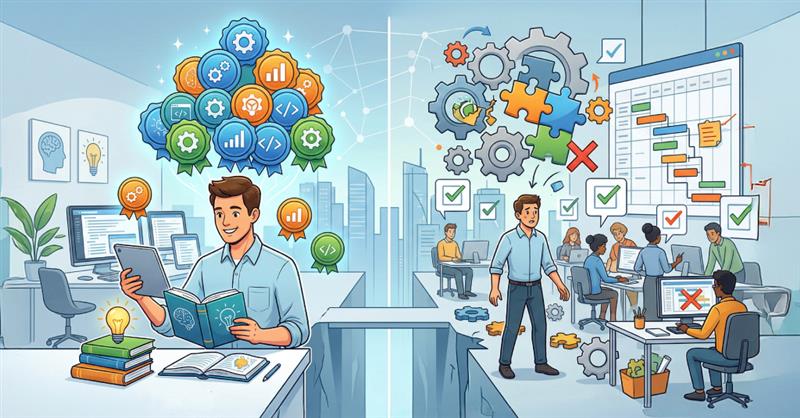
Information delivery does not build decision-making capability
Enterprises do not fail because employees lack information. They fail when employees make incorrect decisions under pressure. Generic eLearning focuses on delivering content instead of developing judgments. It tells learners what the process is, but not how to choose the right action when priorities conflict, data is incomplete, or time is limited.
One-Size-Fits-All Training Fails at Enterprise Scale
When organizations grow, work gets complicated fast. Teams take on new roles, regulations change from place to place, and employees deal with different languages and compliance rules. Generic training rarely keeps up with these differences. Over time, employees find the content irrelevant. Adoption drops and learning outcomes vary across teams. Training that cannot adjust to real-world complexity cannot help employees perform at their best.
Training failures surface quickly and publicly in large organizations
In enterprise environments, training gaps do not stay hidden. Audits expose compliance weaknesses. Safety incidents reveal procedural misunderstandings. Customer issues highlight execution errors. Leadership scrutiny follows soon after. When training fails, the impact reaches operations, reputation, and revenue.

Enterprise Learning Is Different from Standard eLearning
Enterprise eLearning is not just about finishing courses. Its goal is bigger. It helps organizations reduce risk, keep processes consistent, and track who learned what. Standard training cannot achieve these results at an enterprise scale.
Enterprises train multiple audiences with different risk profiles
Generic training fails because it ignores the unique roles within a big business. Whether it is a team lead or a partner, everyone needs a learning path that actually looks like their daily work. When the content matches their real-world responsibilities, you see fewer mistakes and better results.
Training must fit into enterprise systems and governance
Enterprise learning must connect to the tools employees already use. This includes corporate LMS platforms, HR systems, compliance tools, reporting frameworks, and audit requirements. Training that exists on its own does not support workflows or measure effectiveness.
Learning outcomes affect business and reputation
In enterprises, training success can be measured through real outcomes. When it fails, the impact is significant and visible. Compliance issues arise, operational mistakes occur, financial losses follow, and reputational damage can happen. Enterprise learning helps employees follow procedures, make sound decisions, and perform reliably in their daily work.

What Custom eLearning Solutions Mean for Enterprises
Custom eLearning solutions are enterprise training programs designed around real work. It focused on daily tasks, decisions, and workflows. Instead of generic courses, you get role-based scenarios. This help employees improve performance metrics and support compliance.
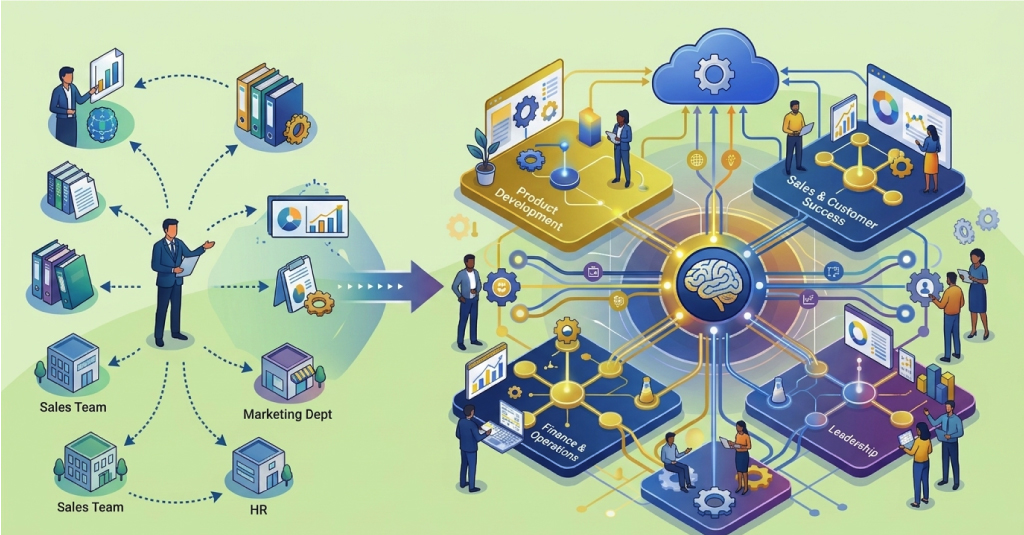
What changes when enterprises move from off-the-shelf to custom learning
Custom eLearning Development Turns Content into Guided Practice
Employees learn through scenario-based learning. Simulations let them make choices and see the results. Experiencing different outcomes helps them handle similar situations at work.
Custom eLearning Design Reflects Real Workflows and Constraints

Custom eLearning vs off-the-shelf eLearning for companies
The main difference is focus. Custom training is built for your specific workplace, but standard courses are just made to work for any general company.
| Aspect | Custom eLearning Solutions | Off-the-Shelf Courses |
|---|---|---|
| Who it’s for | Designed for your employees, roles, and organizational goals | Designed for a broad audience, generalized content |
| How it adapts | Changes with business needs, learner feedback, and evolving workflows | Fixed content that cannot easily adjust to new processes or roles |
| Investment | Higher upfront cost, but builds long-term value and reusable assets | Lower initial cost, but may require repeated purchases or workarounds |
| Time to launch | Longer development, testing, and iteration ensures relevance and quality | Ready to use immediately, minimal setup required |
| Content relevance | Aligned with company culture, policies, compliance, and real-world scenarios | May not fit your specific environment; often needs supplementary material |
| Scaling for growth | Designed to grow with the organization, new roles, and expanding teams | Can scale, but major updates often need additional licensing or modifications |
| Ownership & updates | Fully owned internally, allowing continuous improvements and modifications | Provider-owned; significant changes are difficult or restricted |
| Learner experience | Uses personalized, immersive real-world scenarios and actual job tasks | Generic, basic lessons that lack engagement |
| System integration | Seamless integration with your LMS, HR systems, and workflow tools | Integration possible but often requires extra effort or third-party support |
When should enterprises choose custom eLearning?
Enterprises should choose custom eLearning when training affects risk, scale, or decision quality. At that point, generic courses can no longer support the business reliably.
When Training Impacts Compliance, Safety, or Reputation
Some training carries high stakes. Compliance, safety, and reputation require precision and consistency. Generic courses can’t guarantee traceable outcomes or reduce risk effectively.
When Onboarding Needs to Scale Without Losing Control
When Leadership Training Must Reflect Real Decisions

Where are custom eLearning solutions used in enterprises?
Policy-mapped scenarios replace rule memorization, enabling defensible, repeatable outcomes.
Example: Employees respond to realistic audit or regulatory situations, not abstract policy statements.
Large-scale onboarding
Distinct learning journeys align training with real responsibilities from day one.
Example: New hires see only the processes and systems tied to their specific role.
Leadership development
Leaders practice decisions they will be held accountable for, not theoretical frameworks.
Example: Managers work through trade-offs involving risk, people, and performance.
Sales and business training
Products, pricing, objections, competitors, and market realities replace hypotheticals.
Example: Sales teams rehearse real customer conversations and deal scenarios.
Process and system training
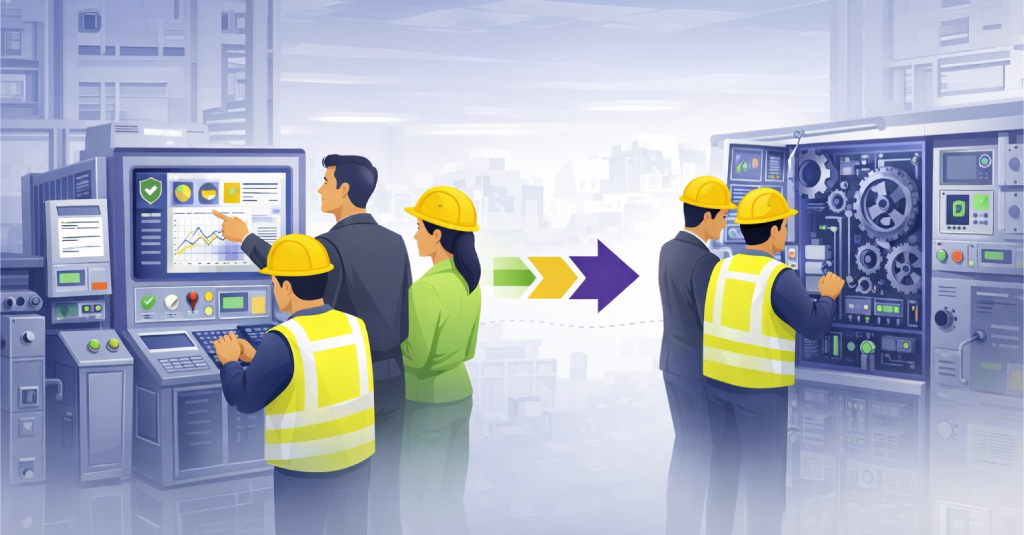
ERP, CRM, and internal tools require context-specific training that generic courses cannot realistically deliver.
Example: Employees learn workflows exactly as they exist inside the organization.
When do enterprises need custom LMS development?
Enterprises need a custom LMS when governance, reporting, and integration matter. Without it, even good eLearning can’t track accountability or show results. Choosing from experienced custom LMS development companies ensures your system integrates seamlessly with HR, compliance, and business platforms.
Reporting and accountability exceed standard dashboards
Leaders and compliance teams need more than course completion numbers. They want role-specific insights and data that show how training actually affects performance.
Integration with HR, compliance, and business systems
Training works best when it is part of your main tech setup. Connecting it to HR and compliance systems is the only way to keep your records accurate without extra manual work.

How to choose the right custom eLearning solutions provider
Select an eLearning company with a proven track record of handling complex, multi-region projects. You need a partner that doesn’t just build content but uses instructional judgment to adapt as your business grows and your compliance needs shift.
Proven experience with enterprise scale and regulation
Look for a partner who understands multi-region delivery, regulatory requirements, and organizational complexity. Enterprise learning comes with real-world constraints, and experience matters.
Instructional judgment, not just development capability
The partner selects scenarios tied to real decisions and removes content that does not affect performance.
Ability to evolve learning as the business changes
How Enterprises Can Avoid Costly Training Mistakes
Use a Risk-First Approach
Start Small with Focused Custom Learning
Begin with a small, outcome-driven program. This lets you test the approach, show results, and reduce risk before scaling across the enterprise.
Custom eLearning training solutions work because it matches how your teams actually do their jobs. Off-the-shelf courses and generic online learning platforms can’t keep up with complex roles or changing workflows.
At Upside Learning, we build custom solutions that mirror your actual operations. By using immersive tools, we ensure your training drives the specific performance gains and measurable outcomes your enterprise demands.
Frequently Asked Questions
Employees forget training content quickly because most programs overload working memory. When too much information is delivered at once, the brain discards most of it.
By focusing on one objective at a time and revising it in short sessions. This helps learners understand the content better and use it in their work.
Cognitive Load Theory is a learning science framework that explains how memory limits affect learning. And how training should be designed to improve retention and application.
Yes. When designed correctly, microlearning improves accuracy, recall, and compliance by reducing cognitive overload. For a deeper perspective on how microlearning works in real business environments and compliance contexts, explore our eBook, “Microlearning: It’s Not What You Think It Is.”
Typically, between 3 to 7 minutes, depending on the complexity of the objective being addressed.

Pick Smart, Train Better
Picking off-the-shelf or custom eLearning? Don’t stress. It’s really about your team, your goals, and the impact you want. Quick wins? Off-the-shelf has you covered. Role-specific skills or behavior change? Custom eLearning is your move.