



What a Connected Learning Ecosystem Really Means
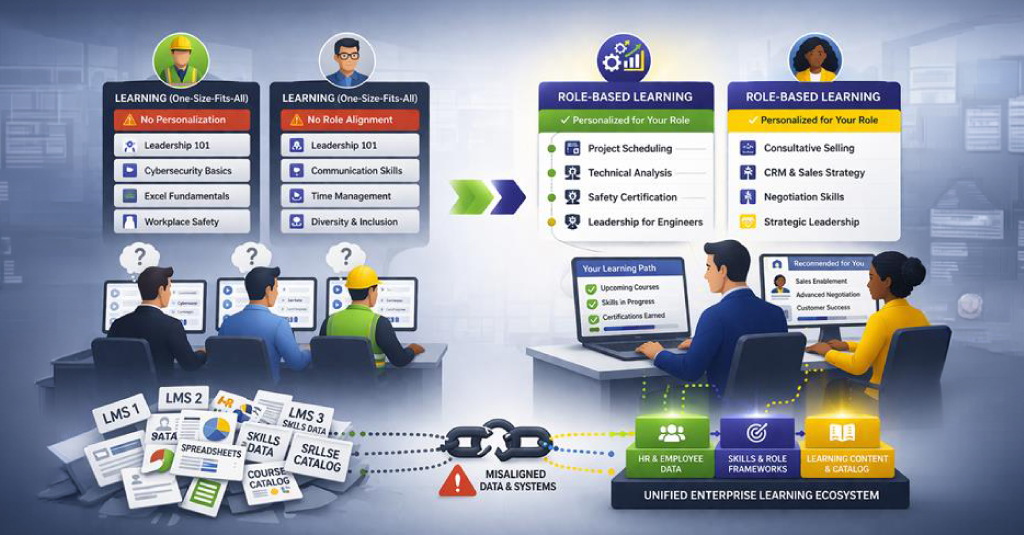
Let’s be real, most corporate learning systems still live on their own islands.
The LMS tracks completions, HR systems track performance, and IT manages access… but none of them really talk.
I’ve been in those meetings where someone from HR proudly says, “We trained 2,000 employees last quarter!”
And then the CFO quietly asks, “Cool. Did it make a difference?”
Cue awkward silence.
A true learning ecosystem connects these dots, linking learning data with performance, skills, and business metrics.
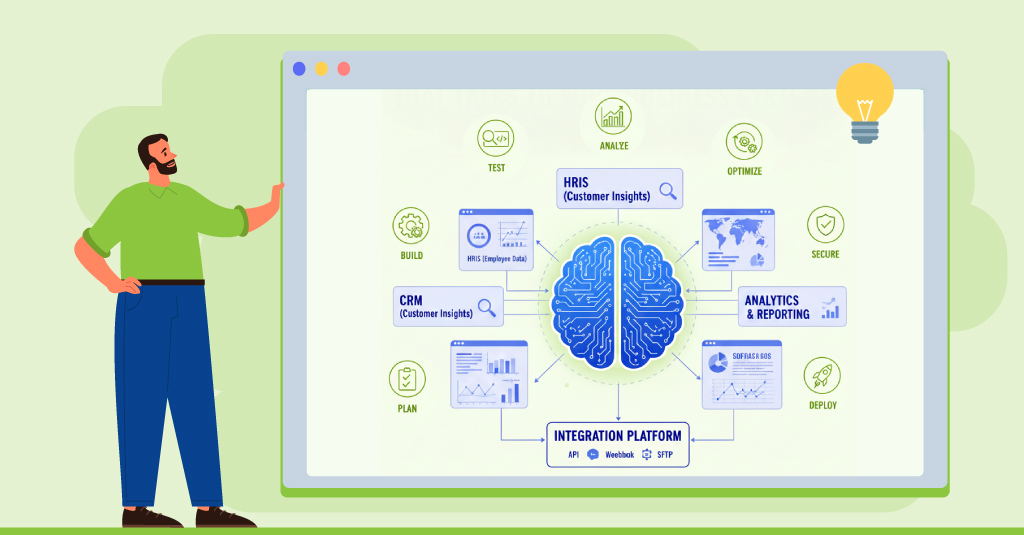
When your LMS, HRIS, and IT systems share data, learning stops being an administrative function and starts driving decisions.

Why LMS Integration is the Backbone of Continuous Learning
Here’s the part most organizations miss: your LMS doesn’t need to do everything.
It just needs to be integral with systems that do.
Think of your LMS as a data source, not a silo. With LMS integration, you can:
-
Send skill completion data directly into HR systems like Workday or SuccessFactors.
-
Feed learning activity into BI dashboards for real-time analytics
-
Trigger personalized learning paths through APIs connected to performance management systems.
One of our clients in the logistics sector did exactly that, connecting their Totara LMS to Power BI. Within months, their leadership team could see how specific learning programs affected productivity metrics.
That’s not just training data. That’s business intelligence.

How to Align Learning Ecosystem Design with Corporate Learning Strategy
When your ecosystem and corporate learning strategy are in sync, learning becomes a capability engine.
Here’s the alignment playbook we use at Upside Learning (and yes, it works in the real world):
-
Start with Skill Architecture
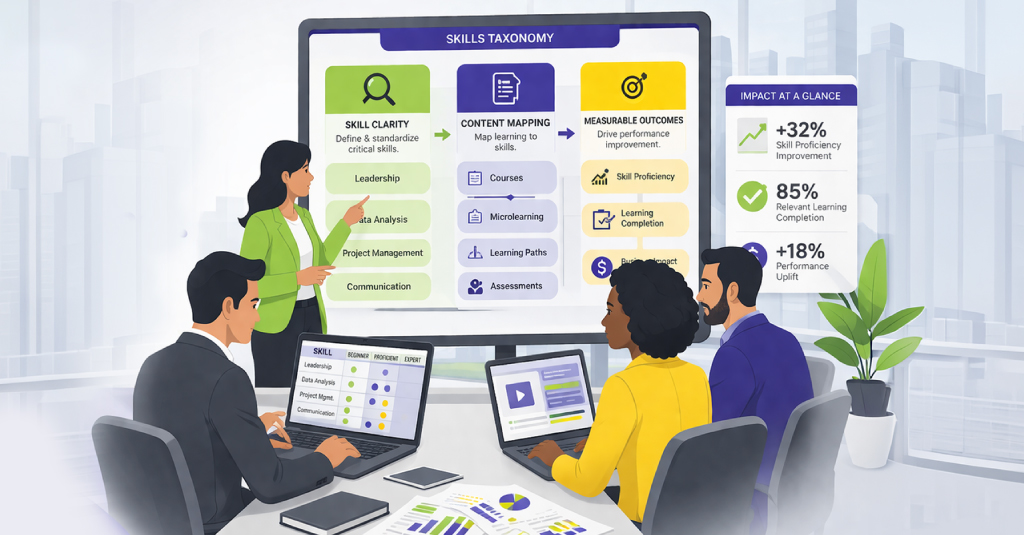
Build a shared skill taxonomy across HR, L&D, and IT. This ensures all systems “speak” the same skill language. -
Design for Data Flow
Map how learning data travels from LMS to HRIS to BI tools. Use xAPI or GraphQL APIs to maintain secure, two-way data exchange. -
Integrate Analytics from Day One
Don’t bolt analytics on at the end. Integrate it into the ecosystem from the start, so learning impact shows up in business dashboards automatically. -
Govern Collaboratively
Co-owned governance across functions, L&D defines meaning, IT ensures security, and HR drives business relevance.
It’s basically applying the ADDIE model to your system architecture: analyze, design, integrate, and evaluate continuously.

Examples of Learning Ecosystem Integration in Action
Let’s make this real.
A global engineering company worked with us to connect their learning ecosystem:
- LMS: Totara
- HRIS: SAP SuccessFactors
- BI Platform: Microsoft Power BI
By integrating skill data from learning into HR dashboards, they could visualize skill readiness by department, not just course completion rates.
Managers started using this data for internal mobility planning and project staffing.
That’s the power of ecosystem thinking when learning data becomes business data.

Common LMS Integration Challenges (and How to Avoid Them)
Even the smartest learning ecosystems can fail if a few fundamentals are ignored:
- Inconsistent Data Models: If your skill tagging in the LMS doesn’t match HR’s taxonomy, integration won’t deliver clean insights.
- Lack of Ownership: No single function should “own” the ecosystem, HR, IT, and L&D must collaborate.
- Overcomplication: Start with 1–2 high-value data flows before connecting everything.
- Analytics Blind Spots: Don’t just report completions; design metrics around behavior and performance outcomes.
A good ecosystem evolves iteratively. Borrow from the SAM model, prototype, integrate, and refine.

Business Benefits of a Connected Learning Ecosystem
Once your systems actually talk to each other, here’s what changes:
-
Data-Driven Learning: Training decisions align with business performance data.
-
Personalized Experiences: Skill data enables targeted learning recommendations.
-
Improved Talent Mobility: Learning data informs succession and workforce planning.
-
Executive Confidence: Leadership sees tangible ROI, not just course completion charts.
Essentially, your corporate learning strategy transforms from reactive to predictive.

Building the Right Partnership Between L&D, HR, and IT
Technology is the easy part. Collaboration is the hard one.
The best ecosystems emerge when these three teams build shared trust and shared data logic.
Start by bringing HR, IT, and L&D together for one conversation:
- What decisions are we trying to make with learning data?
- Where does that data live now?
- How can we connect those dots securely and meaningfully?
That one meeting can do more for your ecosystem than a dozen new tools.
Conclusion: From Learning Systems to Learning Intelligence
Building a learning ecosystem that talks to your business systems isn’t just an IT project; it’s a strategic evolution.
When systems sync, learning becomes measurable, scalable, and visibly tied to performance.
At Upside Learning, we help organizations design, integrate, and optimize connected ecosystems that turn learning data into business intelligence.
If your LMS and HR systems aren’t speaking the same language yet, maybe it’s time to introduce them.
FAQs: Custom vs. Off-the-Shelf eLearning
If your workflows, tools, or brand vibe are one-of-a-kind- or if behavior change matters- custom’s your cheat code.
Yep, upfront it’s lighter on the wallet. But for long-term wins and role-specific skills? Custom flexes harder ROI.
For sure. Start with off-the-shelf for the basics, then sprinkle in custom modules where it really counts.
Depends on how ambitious you get- usually weeks to months. Planning ahead keeps you from sweating deadlines.
For general topics, yeah. For real-life scenarios or changing habits? Engagement can ghost you.
Totally. You own the content, so edits, tweaks, or upgrades? All yours.
Custom can adapt paths, toss in interactive exercises, and mix multimedia to match every brain type.
Mostly basic stuff- completion rates, quiz scores. Custom digs deeper: behavior, skill gaps, all the good analytics.
Quick wins? Off-the-shelf. Lasting change? Custom. Pick your lane- or flex both.
Yep. They make it seamless- fast deployment, tailored experiences, or a mashup.

Pick Smart, Train Better
Picking off-the-shelf or custom eLearning? Don’t stress. It’s really about your team, your goals, and the impact you want. Quick wins? Off-the-shelf has you covered. Role-specific skills or behavior change? Custom eLearning is your move.
Upside Learning makes both options effortless. Whether it’s ready-to-roll courses or fully tailored experiences, we handle the heavy lifting- interactive modules, adaptive paths, branded visuals, and analytics that tell you something. No wasted time, no generic content- just learning that sticks.
Ready to level up your team’s learning game? Connect with Upside Learning today and see how we make training fast, engaging, and results-driven. Your team deserves training that works- and we deliver.